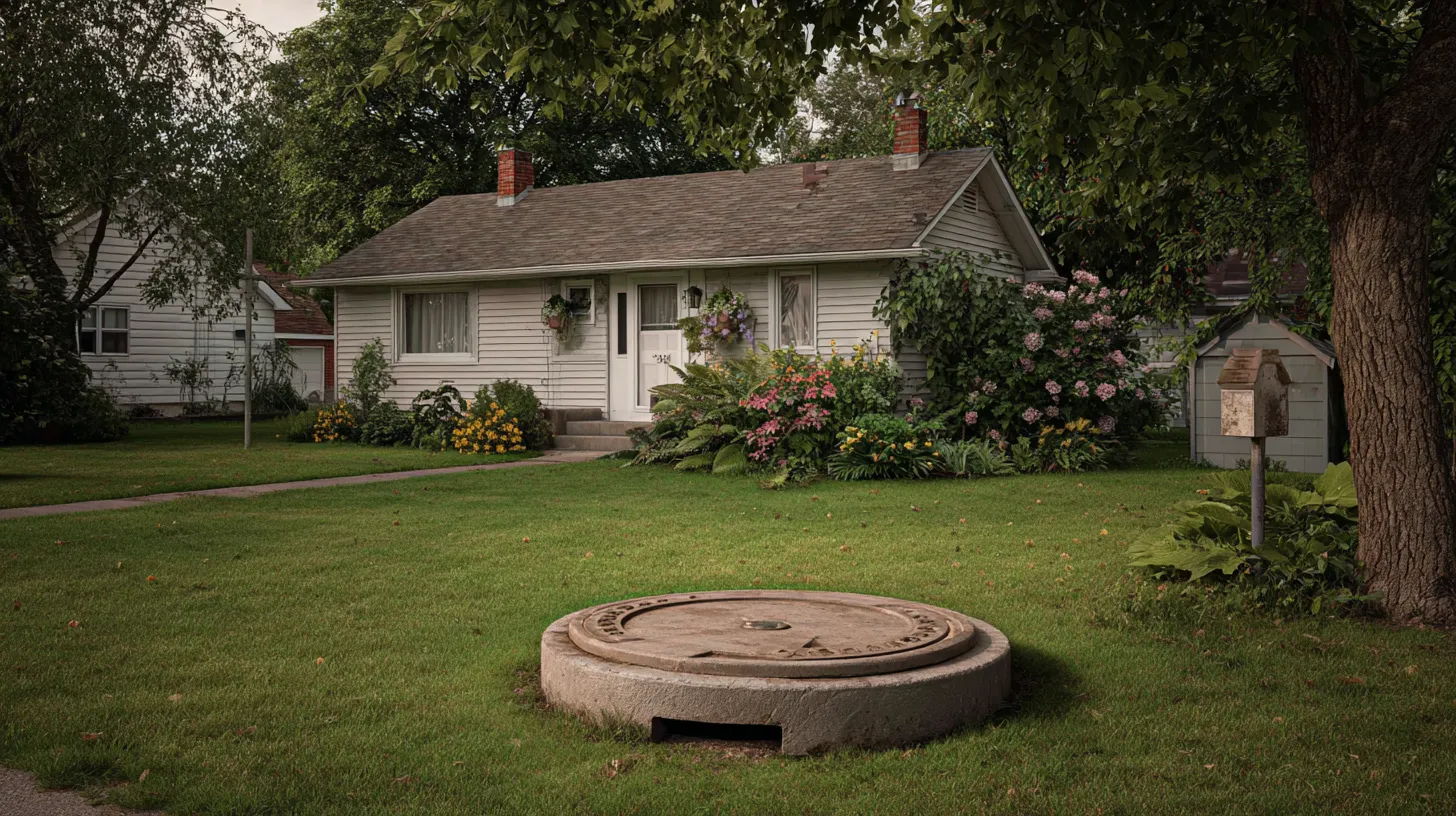
Commercial Plumbing in Grand Rapids: The Complete Guide
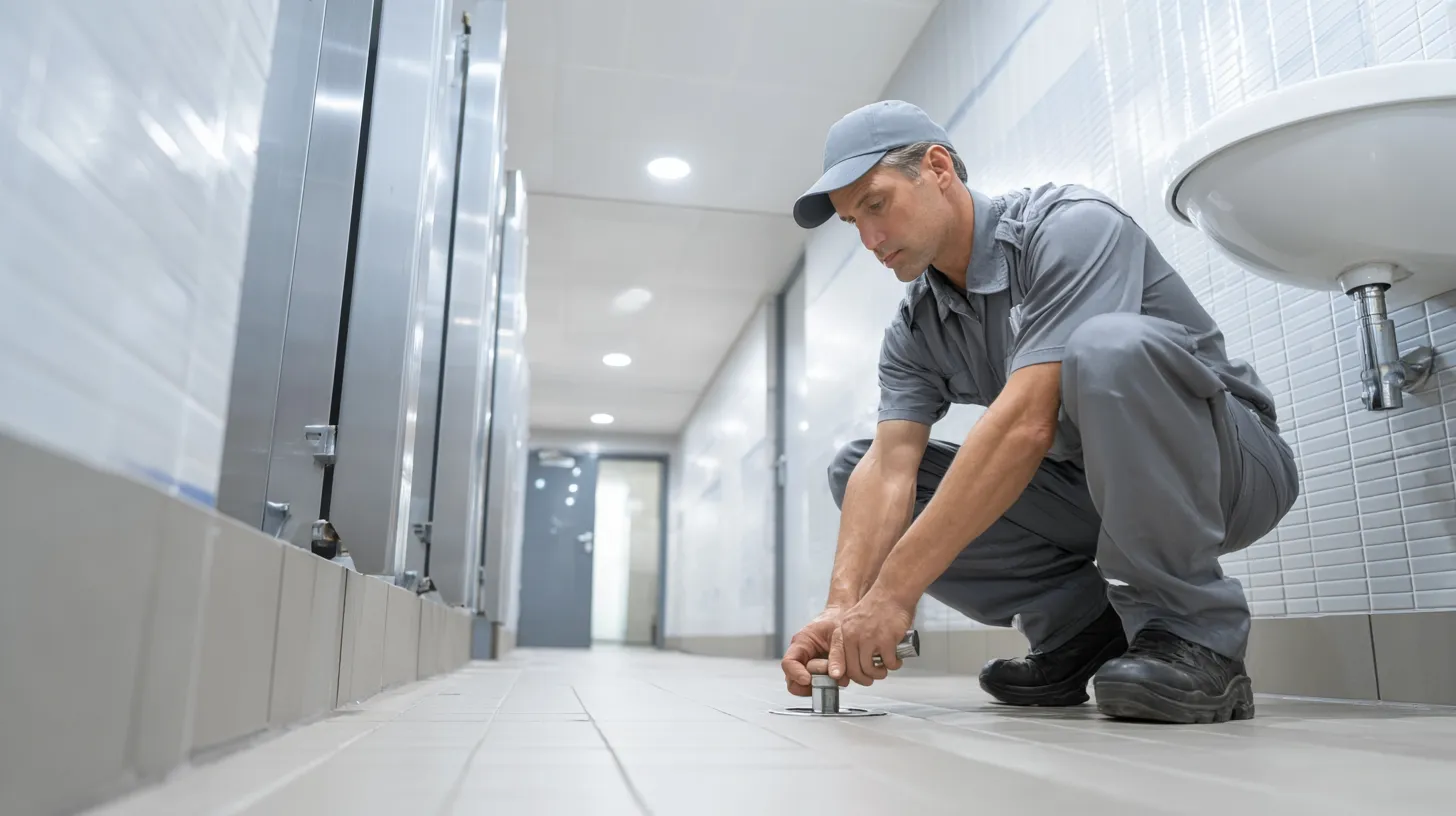
Commercial plumbing is the installation, testing and repair of water, drain and sewer systems in buildings that serve the public, employees or several households — restaurants, offices, retail stores and multi-unit residential buildings. It differs from home plumbing in scale and in regulation: commercial buildings carry larger meters, more fixtures, grease-laden kitchen drains and backflow prevention assemblies that the water utility tracks. In Grand Rapids, Michigan, the work centers on five entities: the commercial plumber, the backflow prevention assembly, the commercial water meter, the grease interceptor and the building sewer. Commercial plumbing in the Grand Rapids area runs through the Grand Rapids Water System's 2026 rules, the City of Wyoming's cross connection program and the 2021 Michigan Plumbing Code.
Commercial Property Types in Grand Rapids
Commercial plumbing loads follow the building type, and five property types account for most Grand Rapids commercial work. Each type sets its own fixture mix, hours of use and rules.
- Restaurants run pot sinks, prerinse sinks, dishwashers and floor drains that carry grease-laden waste, plus carbonated beverage dispensers and water heaters sized for constant demand. The 2021 Michigan Plumbing Code requires a grease interceptor or automatic grease removal device on their food-preparation fixtures.
- Office buildings concentrate demand in shared restrooms. Flushometer valves on urinals and water closets carry vacuum breakers under the city's cross connection rules, and a stuck flush valve runs water around the clock.
- Retail stores combine small restroom loads with irrigation, hose connections and, in food retail, beverage and ice equipment — each a cross connection point.
- Multi-unit residential buildings of four or more units fall under commercial meter rules in Grand Rapids: plan review at the Development Center, Water System meter sizing and a required by-pass on 1-inch and larger meters.
- Property management portfolios spread these systems across addresses served by different water utilities, so one manager handles more than one cross connection program.
The water utility serving the address decides which rules apply. The Grand Rapids Water System serves Grand Rapids and Walker; the City of Wyoming serves Wyoming, Grandville, Jenison and Hudsonville; Kentwood splits at Breton Avenue, with Wyoming water to the west and Grand Rapids water to the east. Building age adds a sixth variable: 37.5% of Grand Rapids homes date from before 1940 (U.S. Census Bureau, ACS 2020–24), and older drain lines of cast iron and clay change how a blockage gets cleared.
Backflow and Cross Connection Control
Backflow control is the one area of commercial plumbing the water utility audits building by building. A cross connection is any piping arrangement that lets non-potable water, chemicals or bacteria reverse into the public supply through back pressure or back siphonage. Section 11 of the Grand Rapids Water System Rules and Regulations (updated January 23, 2026) carries out Michigan Public Act 399 of 1976 and prohibits every cross connection unless the backflow prevention device the Water System specifies is installed. The device the city requires meets or exceeds state rules and the plumbing code, and it sits at the point of cross connection, at the meter setting, or both.
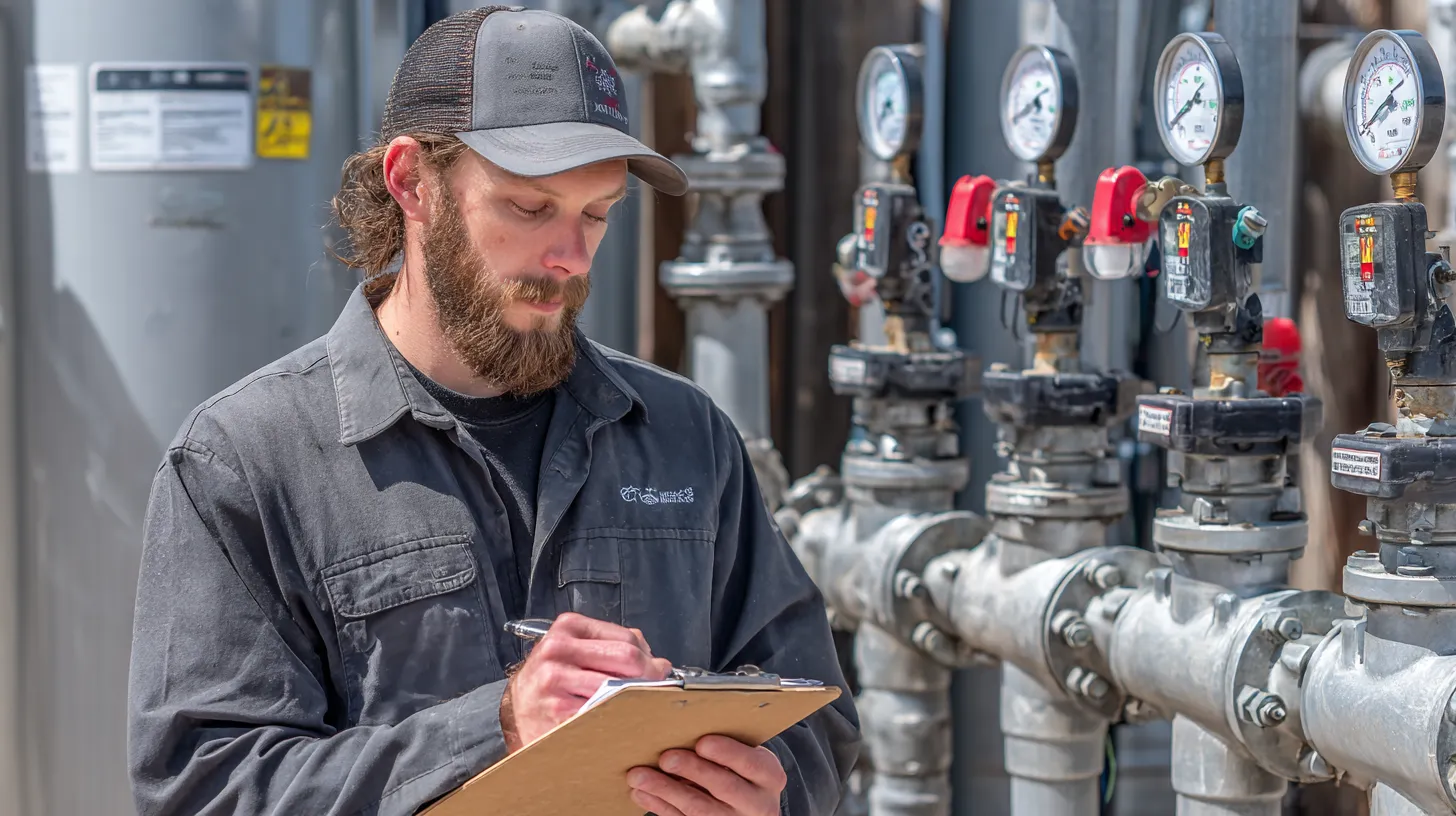
The Water System inspects commercial and industrial facilities on a revolving schedule, reports the program to the state each year and visits higher-risk facilities more often. A notice gives the owner 30 days to eliminate a cross connection, adjusted for the hazard involved. Each extra inspection adds a $70 Cross Connection Re-inspection Fee, and an uncorrected connection ends with water service discontinued.
Testing and submission run on separate clocks:
| Customer class (Grand Rapids Water System) | Device testing | Results submitted to the Water System |
|---|---|---|
| High-hazard facilities | Annually | Every year |
| Commercial and multi-family, not deemed a significant risk | Annually | Every other year, on notice |
| Residential, 1-inch meter or less, no chemical additives | Annually | Every five years, on notice |
Sources: Water System Rules and Regulations §11.4 (2026); City of Grand Rapids Cross Connection Control page.
Section 11.3 assigns a device to specific equipment:
| Equipment | Device the Grand Rapids rules name |
|---|---|
| Carbonated beverage dispenser | Double check valve with intermediate atmospheric vent (ASSE 1012 or ASSE 1022) |
| Low-pressure, untreated boiler | Vented double check (ASSE 1012) |
| High-pressure boiler (30 psi water / 15 psi steam and up) or chemically treated boiler | Reduced pressure principle preventer (ASSE 1013) |
| Cooling tower makeup water | Reduced pressure principle preventer, or an air gap twice the supply pipe diameter |
| Fire sprinkler, standpipe or private hydrant | Double check valve assembly (ASSE 1015 / 1048) or reduced pressure principle preventer; reduced pressure principle where chemicals or antifreeze are present |
| Lawn irrigation | Atmospheric or pressure vacuum breaker (PVB at least 6 inches above the highest head) or reduced pressure principle preventer |
| Urinals and water closets | Flushometer valve (ASSE 1037) with a vacuum breaker, or an anti-siphon ballcock for tank toilets |
| Air conditioning equipment | Reduced pressure principle preventer; potable cooling water above 8 gallons per hour per ton is prohibited |
Plumbing permits come before any device is installed, relocated or replaced.
Commercial Water Service and Meters
The commercial water meter is the Water System's property, but the setting around it belongs to the building owner. Section 10.10 of the 2026 rules makes meter settings the owner's responsibility and keeps the meter and couplings with the Water System, which sets a meter only on correctly plumbed services built of approved materials.
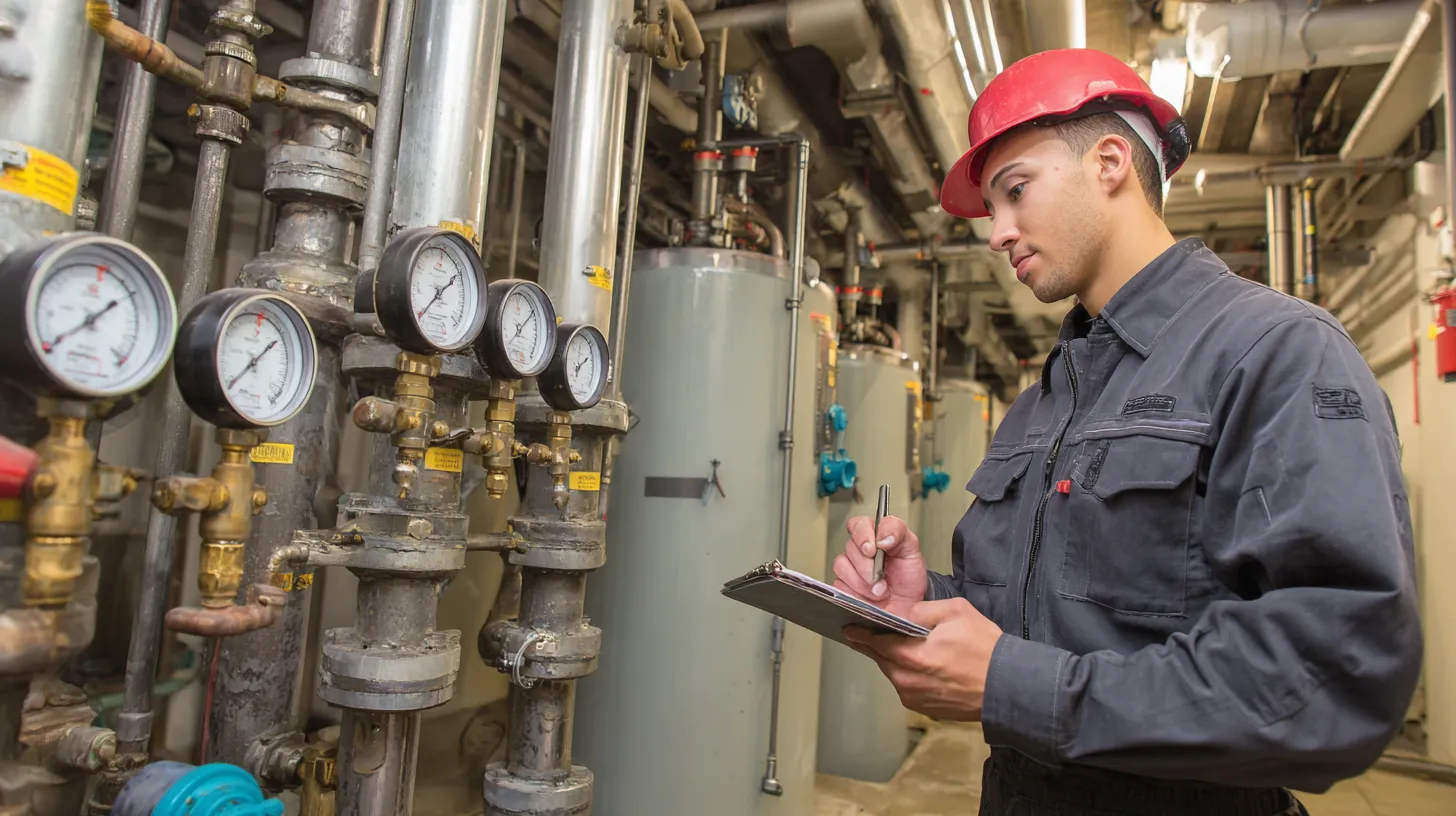
Meter size comes from the building plans. Plans for commercial, industrial and four-or-more-unit residential buildings go to the Grand Rapids Development Center, where the Water System sets the meter size and setting from the type and number of water-using fixtures. Service begins after plan review, permits and fees. Water services 2 inches or smaller in the public right-of-way use Type K copper; larger services use ductile iron or another approved material.
Section 10.11 requires a by-pass around 1-inch and larger meters in commercial, industrial and four-or-more-unit buildings, with by-pass gate valves equal to or larger than the meter and no galvanized pipe ahead of the by-pass gate valve. The Water System recommends a by-pass on smaller commercial settings without requiring one. Existing buildings with combined fire and domestic pipes 4 inches and larger get a combined meter at the owner's expense, and separate fire protection lines carry a monthly charge from $24.03 for a 6-inch line to $96.12 for a 12-inch line.
A disputed bill leads to a meter test. The rules treat a meter as accurate within 5%, and the 2026 schedule prices a customer-requested test by size:
| Meter size | Meter testing fee (2026) |
|---|---|
| Up to 1 inch | $200 |
| 1½ inch | $250 |
| 2 inch | $455 |
| 3 inch | $525 |
| 4 inch or larger | At cost |
A $75 service on/off fee applies to every test, because the water stays off at the curb. When the meter over-registers beyond the accepted range, the city refunds the fee and sets a new meter.
Drain, Grease and Sewer Systems
Commercial drains carry heavier loads than household drains, and three parts of the system drive most commercial drain work: the grease interceptor, the building drain and the building sewer. Section 1003.3.1 of the 2021 Michigan Plumbing Code requires a grease interceptor or automatic grease removal device to receive drainage from fixtures that produce grease-laden waste in food preparation areas, including restaurants, hotel and school kitchens, bars and clubs. The listed fixtures include pot sinks, prerinse sinks, soup kettles, wok stations and dishwashers without prerinse sinks. Section 1003.3.4 exempts individual dwelling units, so apartment kitchens drain to the branch line with no interceptor between sink and sewer.
That difference shapes multi-unit sewer problems. Grease from every apartment kitchen enters one shared building drain, and a single blockage in that line pushes wastewater back through the lowest fixtures first — the floor drains and toilets of ground-floor or basement units. A restaurant's interceptor catches most kitchen grease, but a full or bypassed interceptor sends grease into the building drain, where it hardens and backs up prep-area floor drains.
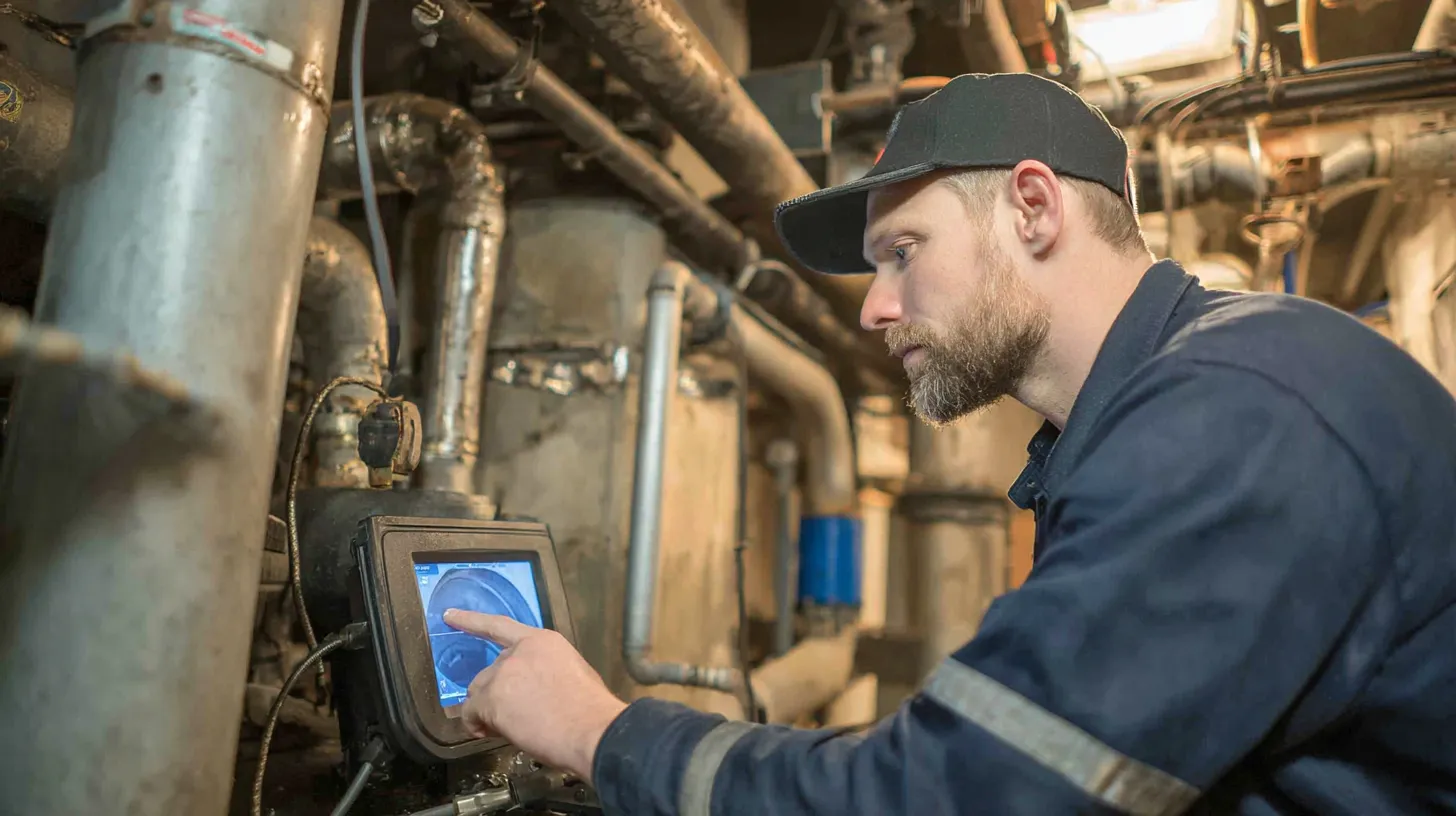
The building sewer, or lateral, carries everything to the public main. Clearing it takes an auger or hydro-jetter through a cleanout, and a sewer camera shows whether roots, grease, a sag or broken pipe caused the backup. When a backup damages a business, the claim path runs through Public Act 222 of 2001 and Grand Rapids City Commission Policy 200-03, covered below.
Commercial Plumbing Failures
Commercial plumbing failures match the failures in any building, at larger scale and with more people affected. Property managers and owners route each failure to the system it belongs to:
| Failure in a commercial building | System involved | Guide that covers it |
|---|---|---|
| Restroom, kitchen or prep-area drain clog | Fixture and branch drains | Emergency drain cleaning |
| Several units or floor drains backing up at once | Building sewer and lateral | Sewer line backup repair |
| Frozen sprinkler branch or supply line on a dock or stairwell | Supply piping | Burst and frozen pipe repair |
| Rising water bill or water through a tenant ceiling | Supply piping and meter | Leak detection and repair |
| No hot water before opening | Water heater | Water heater repair |
| Groundwater rising in a mechanical room pit | Sump system | Sump pump repair |
| Standing water in a lower level | Several possible sources | Flooded basement repair |
| Any active water, sewage or gas emergency | Shutoffs and who to call | Emergency plumbing |
Commercial failures differ in three ways. More fixtures share each line, so one blockage reaches many tenants. Business hours set the cost of downtime, so a water heater that fails before opening holds up a restaurant kitchen. And a frozen wet-pipe sprinkler branch threatens both water damage and fire protection, which is why Grand Rapids requires a reduced pressure principle preventer on sprinkler systems that contain antifreeze.
Grand Rapids Water System Rules Require Annual Testing of Every Backflow Prevention Device
Every backflow prevention device on a Grand Rapids Water System connection gets tested once a year. Section 11.4 of the 2026 rules makes the water customer responsible for installing, testing and maintaining each device and requires an active ASSE 5110 certification for every tester. Repairs on a failed device go to a licensed plumber, and the device is retested before the test form goes to the Water System's Backflow Prevention office at 1900 Oak Industrial Drive NE, (616) 456-4170. Test fees apply per device at the first and final notice, and the 2026 schedule sets a $200 Delinquent Commercial Backflow Test Fee for each device. Refusing to install, test or maintain a device ends with water service terminated to protect the public supply.
The City of Wyoming Accepts Backflow Test Results Only Through Its Web Portal
Wyoming water customers follow a separate program run by the City of Wyoming. Environmental Services inspectors survey every commercial and industrial facility, and testable devices get tested annually under the Michigan Plumbing Code. Testers have needed ASSE 5110 certification since January 1, 2018, and Wyoming registers each one: login credentials issue only after the city receives proof of certification and the annual accuracy certification for the tester's gauge. Results go through the city's web portal; email, mail and fax submissions are refused. Businesses outside Wyoming's city limits that receive Wyoming water, such as those in Grandville or Hudsonville, confirm which cross connection program applies with the utility named on the water bill. Questions go to the Cross Connection Department at (616) 261-3559.
Grand Rapids Requires a Meter By-Pass on 1-Inch and Larger Meters in Commercial and Multi-Unit Buildings
A by-pass keeps water flowing to a commercial building while its meter is tested, repaired or replaced. Section 10.11 of the Grand Rapids Water System rules requires one around every 1-inch and larger meter in commercial, industrial and four-or-more-unit residential buildings; irrigation-only meters are exempt. Section 10.12 keeps the by-pass valve closed and sealed. In an emergency, the owner, customer or occupant breaks the seal and opens the valve, then notifies Customer Service at 311 or (616) 456-3000 within 24 hours. Routine valve exercising waits for Water System approval, and the owner maintains the valve.
Michigan Requires Grease Interceptors on Commercial Food-Preparation Fixtures
The 2021 Michigan Plumbing Code, effective March 12, 2024 for commercial work, sets the grease rule that Grand Rapids restaurants follow. Section 1003.3.1 requires a grease interceptor or automatic grease removal device for fixtures producing grease-laden waste in restaurants, hotel and school kitchens, bars and clubs, and Section 1003.3.4 exempts individual dwelling units and private living quarters. No City of Grand Rapids ordinance setting its own interceptor size or pumping interval appeared in city sources reviewed for this guide, so the state code governs the requirement. The City of Grand Rapids states that grease collects in pipes and causes sewer backups, basement flooding and sewage spills.
Business Owners File Sewer Backup Claims Under Public Act 222 Within 45 Days of Discovery
A business damaged by a sewer backup files the same written claim a homeowner files. Grand Rapids City Commission Policy 200-03, which summarizes Public Act 222 of 2001, requires the claim in writing within 45 days of discovery, naming the claimant, the affected property, the date of discovery and a brief description. The Act pays only when a defect in the public sewer, known to the agency and left unrepaired, substantially caused the damage. A backup caused by an obstruction in the service lead that no government agency caused falls outside the Act. Restaurants and apartment buildings with shared laterals therefore document the backup, and the camera view of its cause, before cleanup.
Frequently Asked Questions
How Often Do Grand Rapids Businesses Submit Backflow Test Results?
Submission follows the hazard rating, while testing stays annual. Grand Rapids Water System rules let commercial and multi-family customers not deemed a significant risk submit results every other year on notice; high-hazard facilities submit every year. A delinquent commercial test costs $200 per device under the 2026 fee schedule.

Who Tests Backflow Prevention Devices In Grand Rapids?
A tester holding an active ASSE 5110 certification performs every test. Section 11.4 of the Grand Rapids Water System rules sets that requirement and sends repairs to a licensed plumber. A failed device gets repaired and retested before the form goes to the Water System; Wyoming adds tester registration and portal submission.
Does A Restaurant In Grand Rapids Need A Grease Interceptor?
A restaurant needs one whenever its kitchen fixtures produce grease-laden waste. Section 1003.3.1 of the 2021 Michigan Plumbing Code requires a grease interceptor or automatic grease removal device for food-preparation fixtures such as pot sinks, prerinse sinks, soup kettles and wok stations. Individual dwelling units are exempt.
Who Sizes The Water Meter For A Commercial Building In Grand Rapids?
The Grand Rapids Water System sizes it. Plans for commercial, industrial and four-or-more-unit residential buildings go to the Grand Rapids Development Center, and the Water System sets meter size and setting from the type and number of water-using fixtures. Service starts after plan review, permits and fees are complete.
Which Commercial Equipment Needs Its Own Backflow Device In Grand Rapids?
Section 11.3 of the Grand Rapids Water System rules names the equipment. Carbonated beverage dispensers, boilers, cooling towers, fire sprinkler systems, irrigation, hose connections, urinals and water closets each carry a specified device, from a vented double check valve to a reduced pressure principle assembly meeting ASSE 1013.
Common Misconceptions About Commercial Plumbing
Misconception: A Backflow Device That Passes Once Never Needs Another Test
Section 11.4 of the Grand Rapids Water System rules requires every backflow prevention device to be tested annually, whatever the submission schedule. Springs, rubber seats and check valves wear, and debris holds a check open. A device that passed last year carries no proof of protection this year, which is why the rules tie testing to the calendar rather than to a past result.
Misconception: Any Plumber Signs Off On A Backflow Test
Grand Rapids requires an active ASSE 5110 certification for every backflow test, and Wyoming has required the same certification since January 1, 2018. Wyoming also registers each tester and checks the annual accuracy certification of the test gauge before issuing portal access. A plumbing license covers the repair of a failed device; the test itself takes the certification.
Misconception: Commercial And Home Backflow Tests Follow The Same Schedule
Grand Rapids sets submission intervals by customer class. High-hazard facilities submit results every year, other commercial and multi-family customers every other year, and residential customers with a 1-inch meter or less every five years on notice. The device in each class still gets tested annually; only the reporting interval changes.
Misconception: One Backflow Device At The Meter Protects Every Fixture Inside
Grand Rapids rules place devices at the point of cross connection, at the meter setting, or both, as the Water System requires. Section 11.3 assigns devices to specific equipment, including beverage dispensers, boilers, cooling towers, hose connections, urinals and water closets. A device at the meter keeps building water out of the public main but leaves the building's own fixtures exposed to the cross connections inside.
Misconception: A Business Opens The Sealed Meter By-Pass Valve Without Telling The City
Grand Rapids keeps the by-pass valve closed and sealed. In an emergency, the owner, customer or occupant breaks the seal and opens it, then notifies Customer Service at 311 or (616) 456-3000 within 24 hours. An open by-pass valve found without that notice counts as prima facie evidence of unlawful water use, and the Water System bills double the estimated water and sewer use plus penalties before restoring service.
Ongoing Debates in Commercial Plumbing
Maintenance agreements and on-call service divide commercial owners. A maintenance agreement schedules drain cleaning, valve checks and backflow tests before a failure closes the business, and it keeps test dates ahead of the Water System's notices. On-call service spends money only when something breaks. Fixture count, hours of operation and the cost of a lost business day decide which approach a building uses.
Reduced pressure principle assemblies and double check valve assemblies divide fire sprinkler designers. Grand Rapids rules accept either device on sprinkler systems without chemical additives. The reduced pressure principle assembly adds a relief zone that discharges water when the checks fail, giving a higher level of protection. The double check assembly costs less, discharges no water and meets the rule. Antifreeze or chemical additives end the debate, because the rules then require the reduced pressure principle device.
By-passes on small commercial meters divide building owners. The Water System recommends a by-pass on commercial settings under 1 inch to keep water flowing during meter work. Skipping it avoids one more sealed valve to exercise and maintain where the rules do not require one. Business hours and tolerance for a short shutoff settle the choice.
One vendor across a portfolio and separate specialists divide property managers. A single plumbing vendor simplifies calls, records and test reminders across several addresses. Separate specialists match each task to its credential: an ASSE 5110 tester for backflow, a grease service for interceptors and a plumber for repairs. Portfolio size and the number of water utilities involved shape the decision.
In-house maintenance staff and outside plumbers divide first response in larger buildings. Staff on site close shutoff valves and contain water within minutes. An outside plumber brings permits, licensed repair work and certified testing that staff cannot sign off.
Components of a Commercial Plumbing System
A commercial plumbing system works through five parts that home systems either lack or carry in smaller form. The test cock is a component of the backflow prevention assembly; the certified tester attaches a gauge at each test cock to confirm that the checks and relief valve hold. The by-pass valve is a component of the commercial meter setting; it stays sealed and carries water around the meter during an emergency or meter work. The grease interceptor is a component of the commercial kitchen drain system, holding fats, oils and grease from food-preparation fixtures before the waste reaches the building drain. The vacuum breaker is a component of the flushometer valve on a commercial water closet or urinal, stopping bowl water from siphoning back into the supply. The cleanout is a component of the building drain, giving the plumber straight access for an auger, jetter hose or sewer camera without pulling a fixture. Commercial plumbing service starts by finding which of these parts failed.
Summary
Commercial plumbing in Grand Rapids covers five areas: the property types it serves, backflow and cross connection control, commercial water service and meters, drain, grease and sewer systems, and the failures that close a business. Grand Rapids Water System rules require annual testing of every backflow prevention device by an ASSE 5110-certified tester, a by-pass on 1-inch and larger commercial meters and plan review before service starts. The 2021 Michigan Plumbing Code requires grease interceptors on commercial food-preparation fixtures. Commercial plumbing in the Grand Rapids area keeps restaurants, offices, retail stores and apartment buildings inside those rules and running.