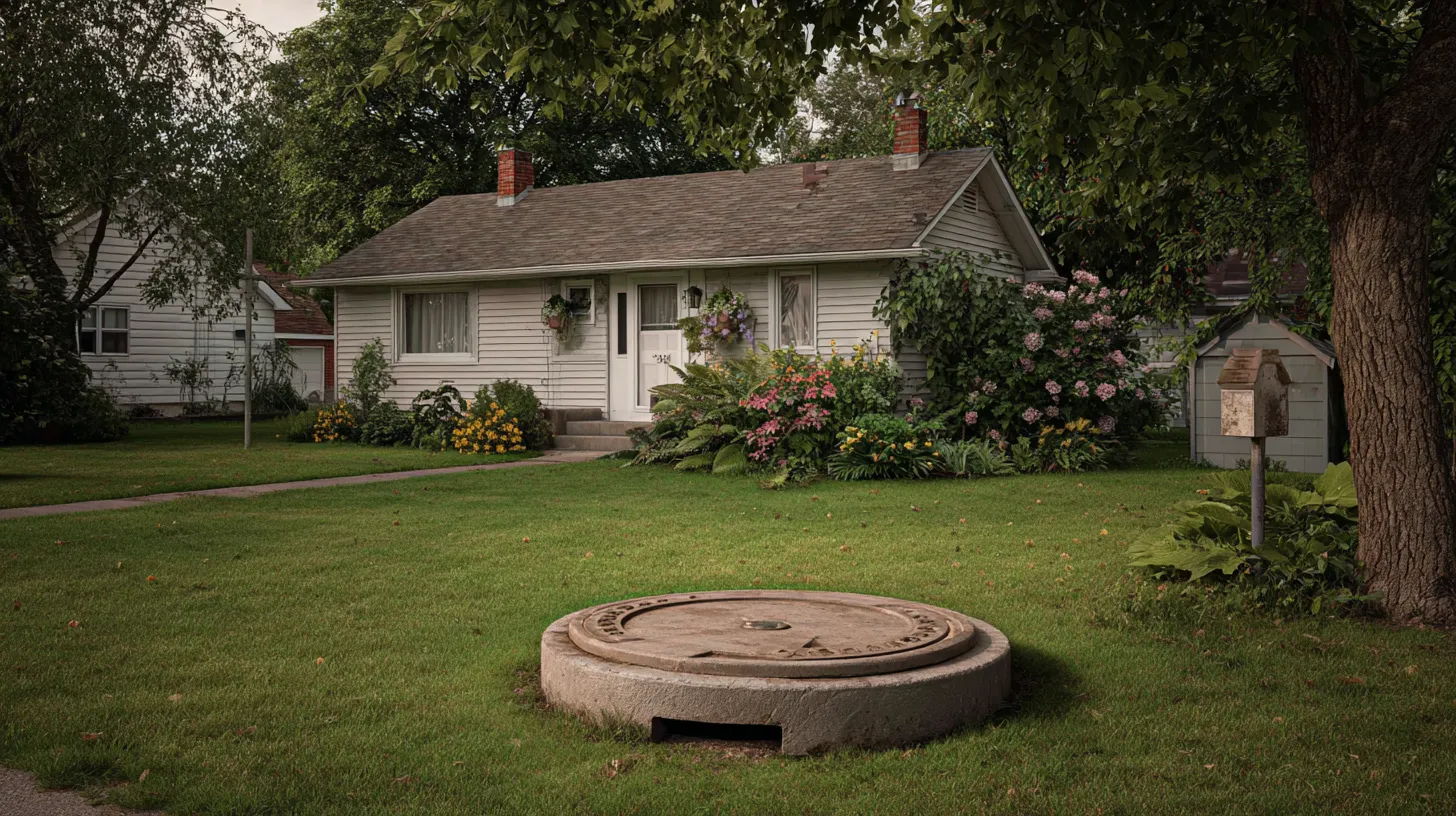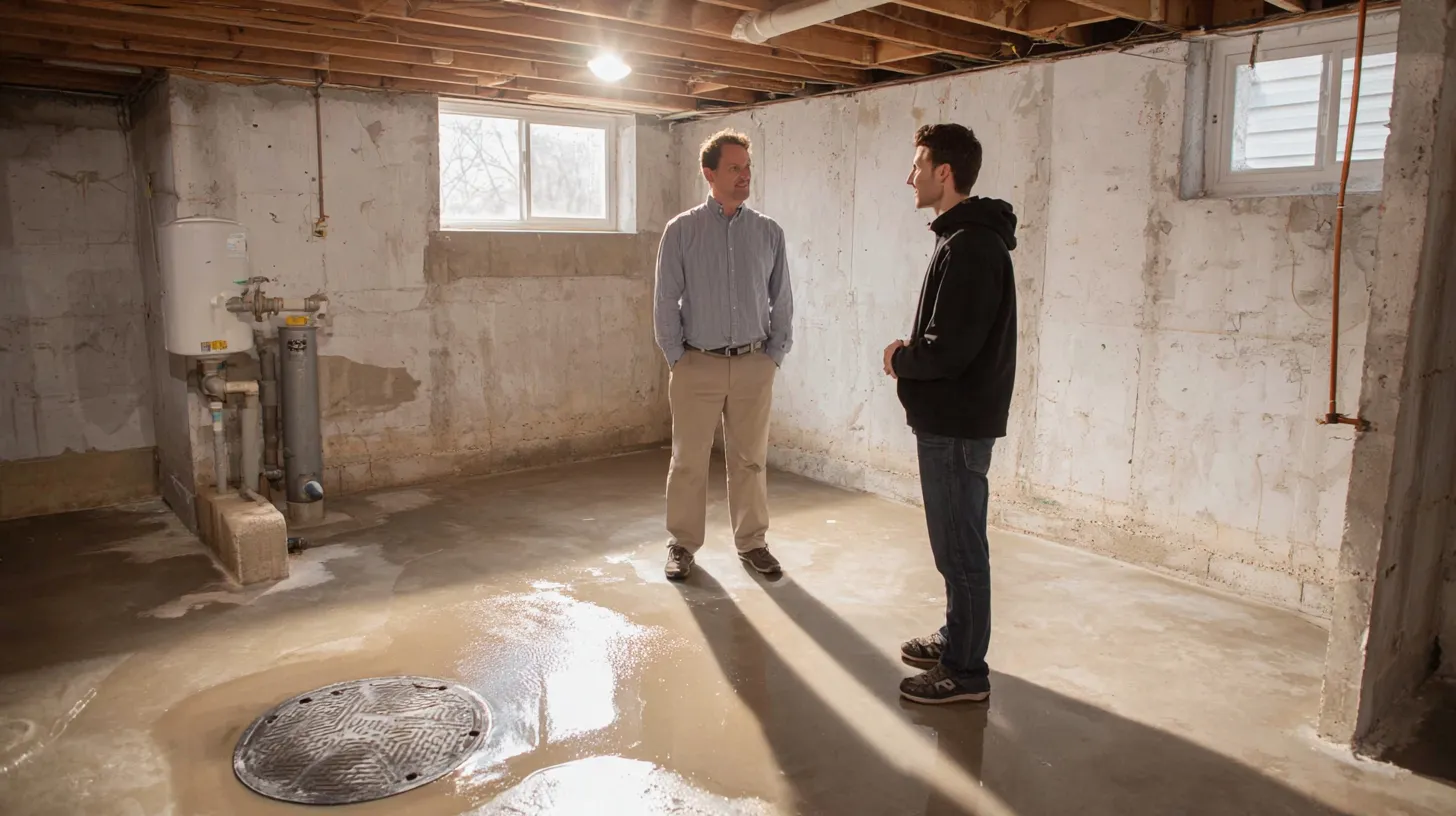
Sewer Line Backup Repair in Grand Rapids: The Complete Guide
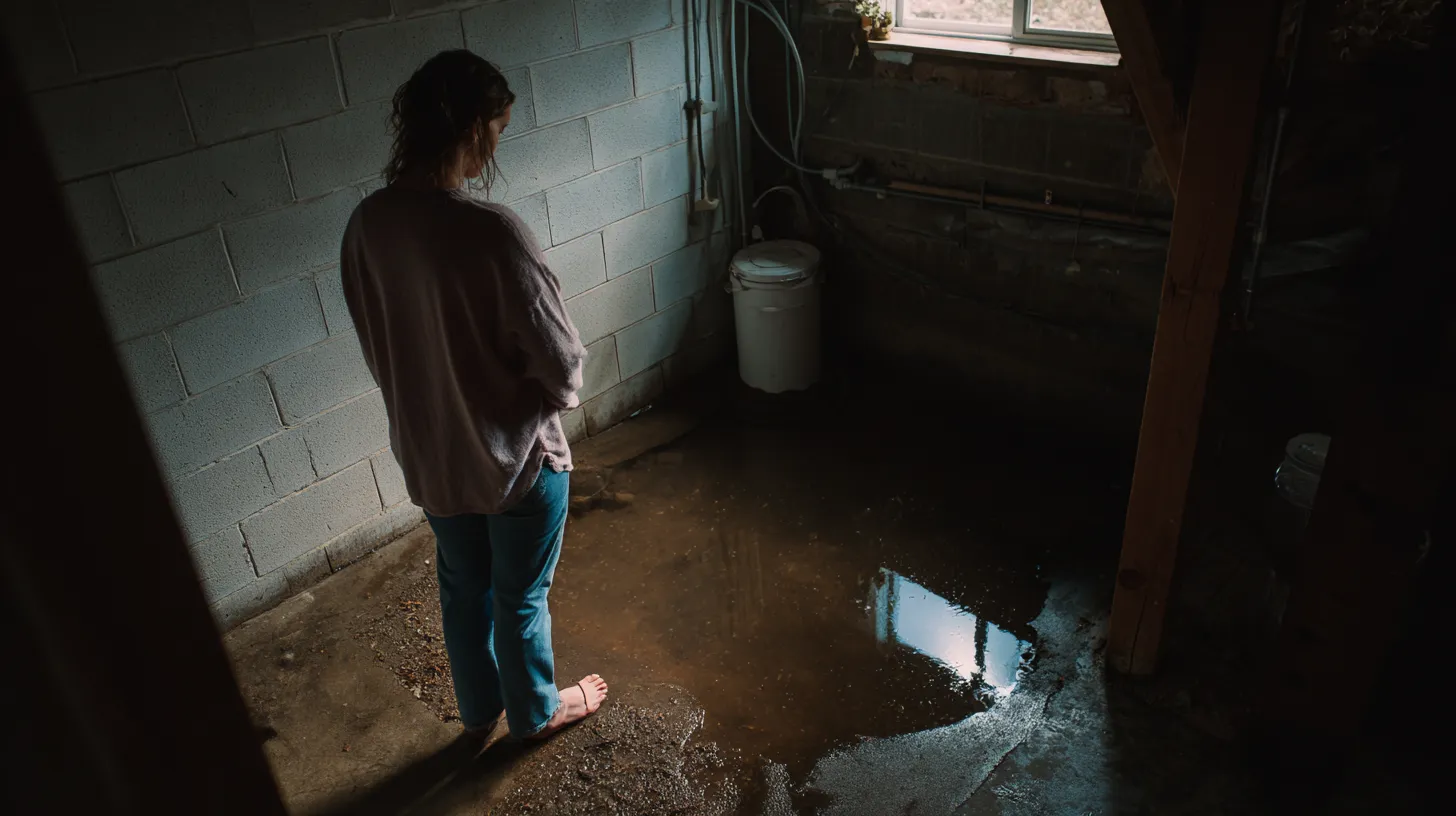
Sewer line backup repair is the clearing and repair of a blocked or failed drain line that pushes wastewater back into a building instead of carrying it to the public sewer. In Grand Rapids, Michigan, the work centers on five entities: the sewer backup itself, the sewer lateral that links each building to the street main, the main sewer cleanout that gives access, the sewer camera that finds the cause and the backwater valve that blocks reverse flow. A sewer backup plumber clears the line first, then inspects it on camera and repairs the failed section. Sewer line backup repair in the Grand Rapids area also runs through city claim rules, footing drain programs and five separate treatment systems.
Causes of Sewer Backups
Sewer backups start when something narrows or blocks the path between the building drain and the public sewer. Five causes account for most Grand Rapids-area main line clogs: tree root intrusion, grease buildup, flushed wipes and hygiene products, footing drain inflow during rain and collapsed or bellied pipe.
Roots enter through joints. Maple and willow roots find the gaps between clay tile sections, grow inside the pipe and trap paper and grease until flow stops. Grease from kitchen drains cools and hardens on the pipe wall; a restaurant fryer line builds that layer faster than a home kitchen. "Flushable" wipes hold together and catch on roots and joints.
Rain changes the picture. Footing drains tied into the sanitary lateral send groundwater into a line sized for household waste, and the overload backs sewage up through the lowest opening in the building. The City of Grand Rapids targets this cause directly through its Footing Drain Disconnection Program.
Structural failure causes the rest. A sagging section, called a belly, holds water and debris. A cracked or collapsed section stops flow entirely.
Each cause carries different attributes:
| Cause | Onset | Rain-dependent | Returns after clearing |
|---|---|---|---|
| Tree roots | Gradual | No | Yes, until the joint is repaired |
| Grease | Gradual | No | Yes, with continued use |
| Wipes | Sudden | No | Only with continued flushing |
| Footing drain inflow | Sudden, during storms | Yes | Yes, with each heavy rain |
| Belly or collapse | Gradual, then sudden | No | Yes, until the section is replaced |
Grand Rapids-Area Sewer Utilities and Programs
Sewer utilities decide who answers a problem in the street main and which programs apply to a property. Five systems treat wastewater across the core Grand Rapids area: the City of Grand Rapids, the Wyoming Clean Water Plant, the Grandville Clean Water Plant, the North Kent Sewer Authority and the Byron-Gaines Utility Authority.
| Town | Sewer collection and treatment |
|---|---|
| Grand Rapids | City of Grand Rapids |
| Walker | City of Grand Rapids, entire city |
| East Grand Rapids | East Grand Rapids collection, Grand Rapids treatment |
| Grand Rapids Township, Ada Township | City of Grand Rapids by contract or wholesale |
| Kentwood | West of Breton Avenue: Wyoming Clean Water Plant; east: City of Grand Rapids |
| Wyoming | Wyoming Clean Water Plant (24 million gallons per day after its 2007 expansion) |
| Grandville, Jenison, Hudsonville | Grandville Clean Water Plant (23,000+ customers) |
| Byron Center, Cutlerville | Byron-Gaines Utility Authority; mostly Wyoming Clean Water Plant, small share Grand Rapids |
| Rockford, Plainfield Township, Comstock Park | North Kent Sewer Authority, PARCC Side Clean Water Plant (2008) |
Sources: City of Grand Rapids, City of Wyoming, City of Kentwood, City of Walker, City of East Grand Rapids, City of Grandville, Byron-Gaines Utility Authority, Plainfield Township, City of Rockford (2025–2026).
Responsibility splits by town. East Grand Rapids makes owners responsible for the sanitary line from the house to, and including, the connection to the city main. When a backup hits, East Grand Rapids crews check the main in the street first; a clear main places the blockage in the private lateral, and a private plumber clears it. East Grand Rapids takes after-hours sewer calls at (616) 949-7010 and recommends a sanitary backflow prevention device in every lateral.
Inside Grand Rapids, three city programs shape sewer backup repair:
- City Commission Policy 1000-22 funds backwater valves, footing and roof drain disconnection and sump pumps for eligible properties.
- The Footing Drain Disconnection Program moves footing drain water from the sanitary sewer to the storm sewer in targeted neighborhoods.
- City Commission Policy 200-03 handles sewer backup claims under Michigan's Public Act 222 of 2001.
Sewer Line Components
Sewer line components carry wastewater from every fixture to the public sewer, and each one marks a point where a backup starts or stops. The five components are the building drain, the sewer lateral, the main sewer cleanout, the basement floor drain and the backwater valve.
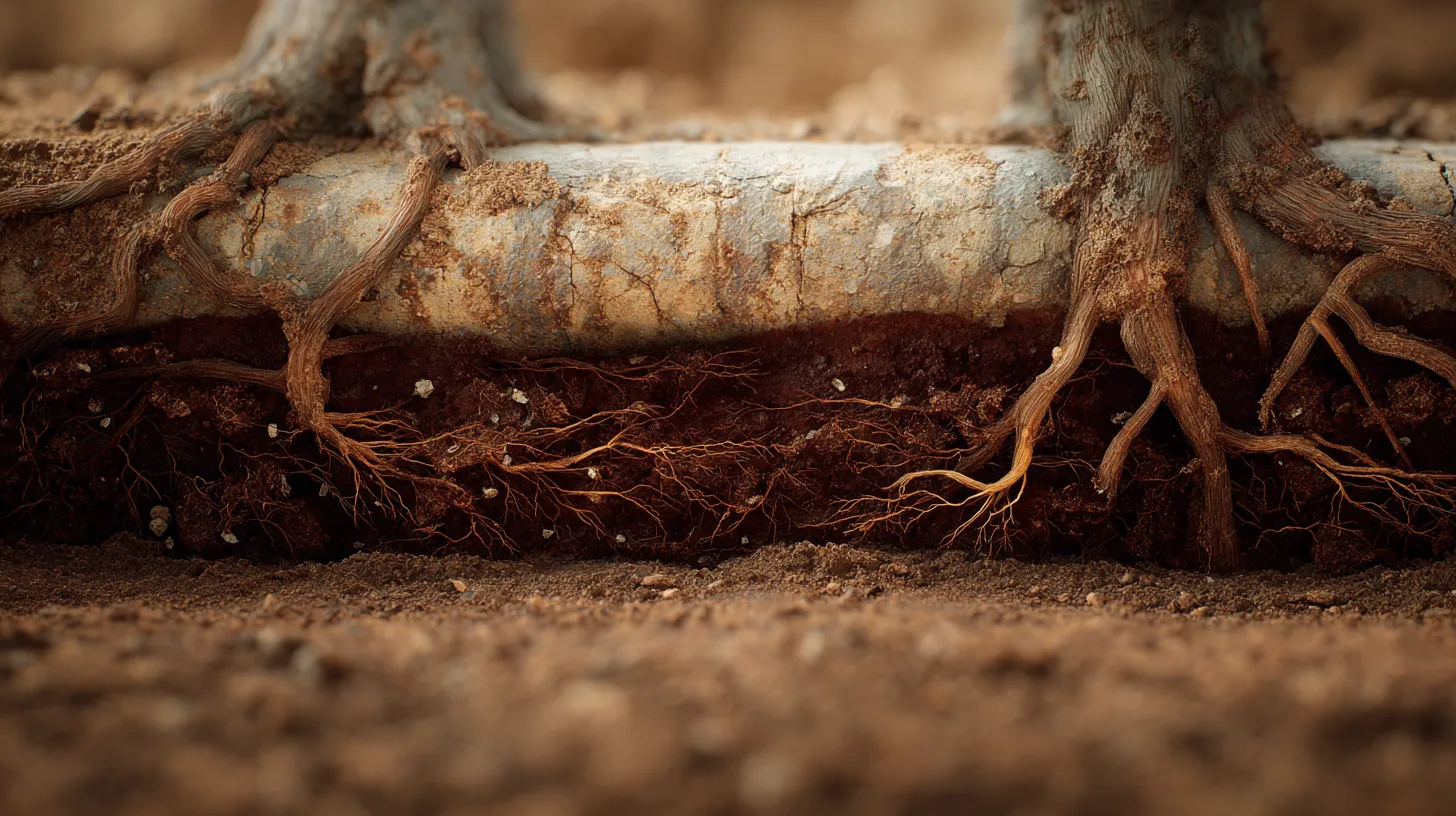
The building drain collects every fixture branch inside the house; in older Grand Rapids homes it is often cast iron. The sewer lateral carries that flow under the yard to the main in the street. Lateral material follows the age of the house: clay tile, cast iron and Orangeburg (bituminous fiber) pipe in older stock, PVC Schedule 40 in newer construction.
Housing age sets the odds. The U.S. Census Bureau's American Community Survey (2020–2024) puts the median Grand Rapids home at 1953, with 37.5% built before 1940. East Grand Rapids follows at 28.8% before 1940. Wyoming's median home dates to 1969, Kentwood's to 1983 and Walker's to 1984.
The main sewer cleanout, usually a Y-fitting with a threaded cap near where the drain leaves the house, gives a plumber direct access to the lateral. The basement floor drain sits at the lowest point of the system, so it overflows first. A backwater valve on the lateral closes a flapper gate when flow reverses.
Diagnosis and Clearing Methods
Diagnosis and clearing methods find the blockage, open the line and record what caused it. Five tools do this work: the drain auger, the root cutter, the hydro-jetter, the sewer camera and the line locator.
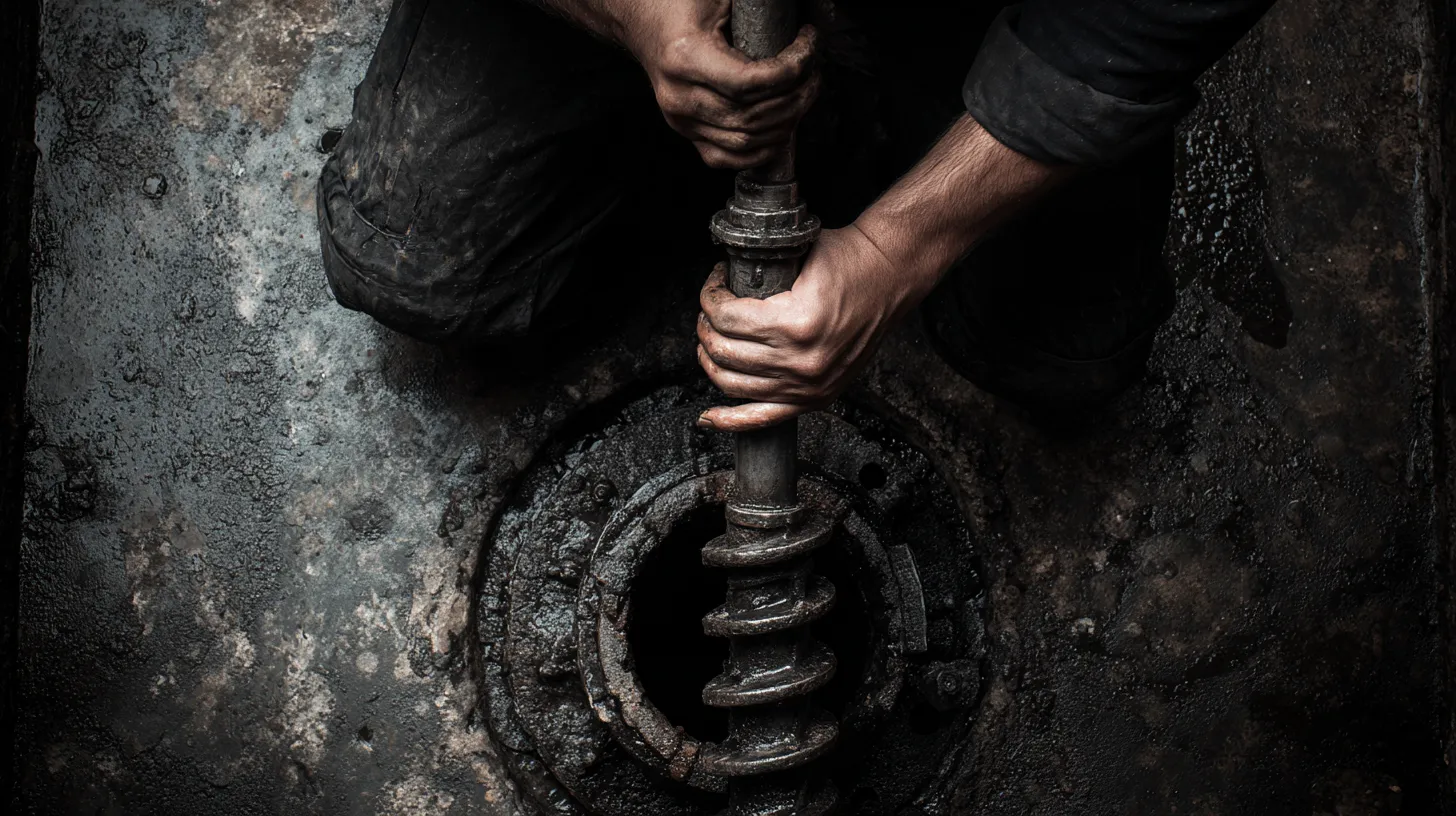
Diagnosis starts with the number of affected drains. One slow fixture points to a branch line. A floor drain that rises when the washer empties points to the building drain or lateral. The plumber then opens the main sewer cleanout and clears the line.
A sectional cable auger punches through the blockage and restores flow. A root-cutting blade head shears roots back to the pipe wall. A hydro-jetter scours roots, grease and scale from the full circumference of sound pipe; fragile or deformed pipe, such as softened Orangeburg, calls for the auger instead.
The sewer camera follows. A self-leveling push camera records the lateral on video, and a sonde transmitter in the camera head lets a receiver mark the depth and position of any defect from the surface. That footage separates a cleared clog from a broken joint.
A 2026 Michigan plumbing cost guide (askdoss, updated August 2026) lists these ranges:
| Method | Typical Michigan cost |
|---|---|
| Clogged drain cleared with a snake or auger | $150–$350 |
| Root cutting (labeled a temporary fix) | $300–$600 |
| Sewer line hydro-jet cleaning | $350–$800 (average $500) |
| Sewer camera inspection | $200–$400 |
Repair and Replacement Options
Repair and replacement options fix the pipe once clearing and camera work show structural damage. The five options are spot repair, trenchless lining, pipe bursting, open-trench excavation and full lateral replacement.
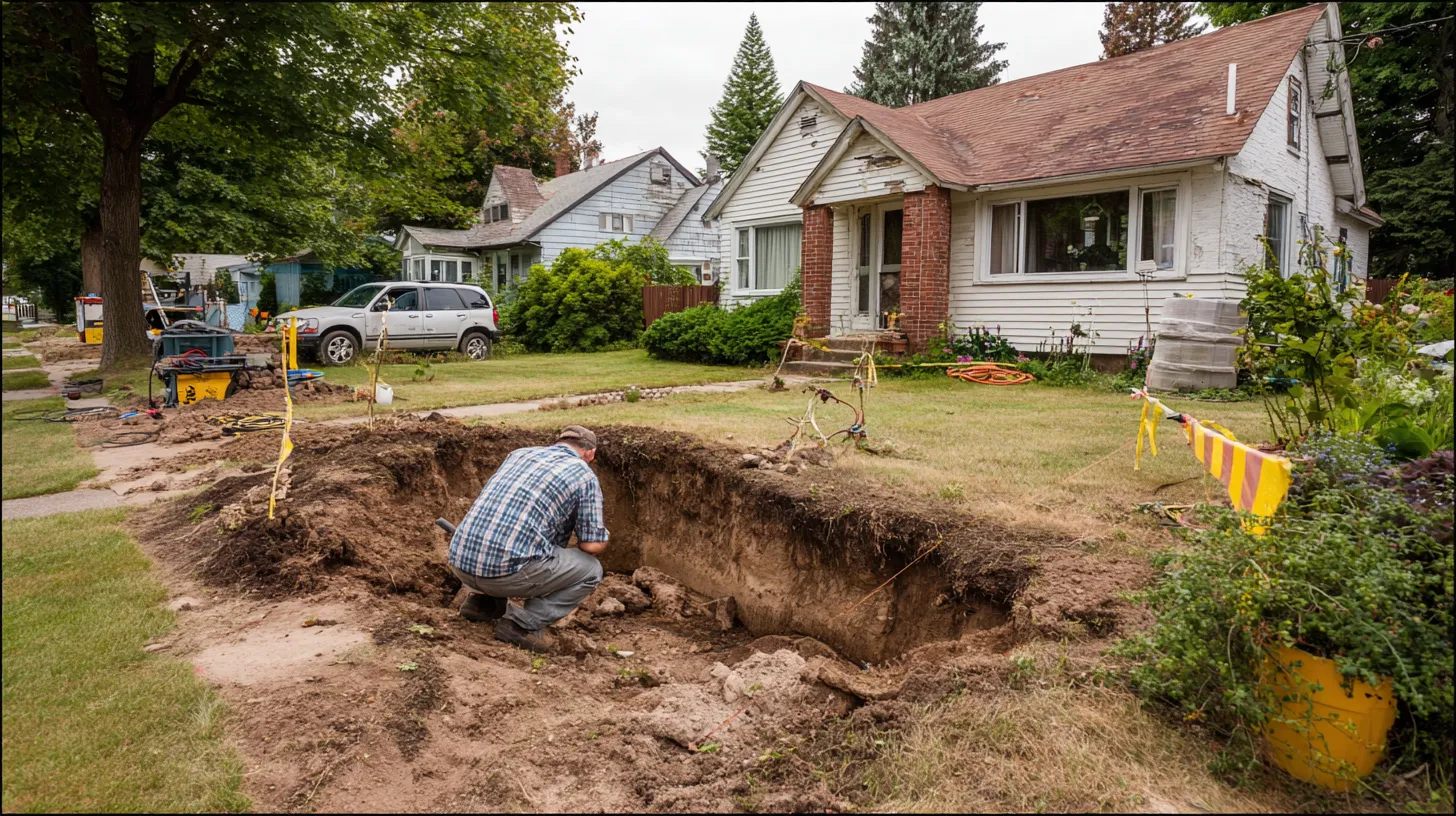
A spot repair replaces one broken joint or short section, usually with a clamp-and-coupling repair. A cured-in-place pipe (CIPP) liner forms a new pipe inside the old one through the cleanout and a small access pit. Static pipe bursting pulls new HDPE pipe through the old line while splitting it outward. Open-trench excavation exposes the lateral for direct replacement with PVC Schedule 40. Full lateral replacement ends repeat failures in pipe that is failing along its length, including Orangeburg.
Permits come with the work. The Grand Rapids Water System Rules and Regulations (updated January 23, 2026) list a Sanitary Service Line Inspection Permit at $100 inside city limits and $115 outside, a Footing Drain Lateral Inspection Permit at the same rates and a Street Opening Permit at $300. East Grand Rapids issues its own sewer lateral permits.
The same 2026 Michigan cost guide lists:
| Repair | Typical Michigan cost |
|---|---|
| Sewer line spot repair | $1,500–$4,000 (average $2,500) |
| Bellied pipe spot repair | $1,500–$3,000 |
| Trenchless relining | $3,000–$6,000 |
| Sewer line replacement | $3,000–$7,500 (average $5,000) |
| Backwater valve, installed | $1,000–$2,500 |
Grand Rapids Requires a Written Sewer Backup Claim Within 45 Days of Discovery
A sewer backup claim against the City of Grand Rapids stays valid only when it arrives in writing within 45 days of discovery. City Commission Policy 200-03 lists the required contents: the claimant's name, address and phone number, the affected property's address, the date of discovery and a brief description. Claimants who miss the 45-day window receive no compensation. The Risk Management Office requires photos of the damage and asks for photos or video of the cause, receipts or two repair estimates and, for homes, the homeowner's insurance policy and declarations page. The office lists 30 to 60 business days to process a claim and "highly" encourages owners to carry insurance that covers sanitary sewer overflow. Documentation therefore starts before cleanup, while the water line on the wall still shows.
Michigan's Public Act 222 Excludes Backups Caused by a Service Lead Obstruction the City Did Not Cause
Public Act 222 of 2001 limits municipal payment to backups caused by a defect in the public sewage system. Under the Act, as summarized in Grand Rapids Policy 200-03, a claimant shows all five conditions: the agency owned, operated or discharged into the failed part of the system, the system had a defect, the agency knew of the defect or had reason to know of it through reasonable diligence, the agency failed to fix it in a reasonable time, and the defect substantially caused the damage. A backup falls outside the Act when a substantial proximate cause was an obstruction in the service lead that no government agency caused, or a sump, building drain, surface drain, gutter or downspout connected to the sewer. Grand Rapids also keeps a hardship payment of up to $1,000 for backups caused by a blockage in the city's sewer main, paid at the Risk Manager's discretion, once per parcel per event, in exchange for a full release. Damage from an obstruction in a sewer lateral does not qualify for that payment.
Grand Rapids Policy 1000-22 Pays Up to 100% of the City Contract Price for Backwater Valves on Eligible Properties
City Commission Policy 1000-22 pays up to 100% of the City contract price for a set of backup-prevention work: initial inspection of the private sanitary system, backwater valve installation, disconnection of roof and footing drains from the sanitary lateral, a sump pump and discharge piping to the lawn or storm sewer. Eligibility requires a sewer backup in the past 10 years caused by an overloaded sanitary sewer, or a location that contributes to downstream backups. The program covers retail customers across the Grand Rapids sanitary sewer service area; its release clause names Cascade Charter Township, Grand Rapids Charter Township, Kentwood, Tallmadge Township, Walker and Wright Township. A contractor retained by the City performs the funded work, payments run first come, first served, and the owner signs an agreement to maintain the installed equipment.
The Grand Rapids Footing Drain Disconnection Program Gives Owners 90 Days to Disconnect After Notice
The City of Grand Rapids adopted its Footing Drain Disconnection Program in September 2010 to keep stormwater out of the sanitary sewer and cut basement backups. The city selects project areas from flow studies, hydraulic models and service records, upgrades the storm sewer first and then mails each owner a notice, an informational packet and a list of approved contractors. Owners have 90 days to disconnect; owners who do not participate pay an added charge on the sewer bill. The program generally covers all costs, but the scope and price gain approval before any work starts. Owners choose an approved contractor or do the work themselves, with their own labor unreimbursed, and they own and maintain the sump pump and piping afterward.
Grand Rapids Eliminated 59 Combined Sewer Overflow Sites by 2015
Grand Rapids finished its Sewer Improvement Project in 2015, eliminating 59 combined sewer overflow sites with 119 miles of new pipe. Before separation, combined sewers carried stormwater and sanitary waste in one pipe, and heavy rain overflowed into the Grand River: 12.6 billion gallons of raw sewage in 1969 against zero in 2014. Separation gave stormwater its own pipes in the public system. It left the private side unchanged, where footing drains still tied to sanitary laterals keep adding rainwater; the Footing Drain Disconnection Program and Policy 1000-22 target that inflow.
Frequently Asked Questions
How Does A Plumber Tell A Main Sewer Backup From A Single Clogged Drain?
The number of affected drains tells them apart. One slow sink points to that fixture's branch line. Water rising at the basement floor drain when a toilet flushes or the washer drains points to the building drain or lateral, which every fixture shares.
What Does A Sewer Camera Inspection Show?
A sewer camera shows the inside of the lateral on video: roots at joints, cracks, offset or sagging sections, grease and collapse. A locator marks the camera head's depth and position from the surface, so a repair targets one spot instead of the whole yard.
Who Pays When Sewage Backs Up Into A Grand Rapids Basement?
The owner pays first, through a homeowner's sewer backup endorsement where one exists. The City of Grand Rapids pays only when a defect in the public sewer caused the backup and a written claim arrives within 45 days of discovery, under Public Act 222 of 2001.
Does A Backwater Valve Stop Sewer Backups?
A backwater valve stops sewage flowing from the public sewer back into the building; its flapper gate closes when flow reverses. It does not clear a clog inside the owner's own lateral, and it needs regular cleaning. Grand Rapids Policy 1000-22 funds valves on eligible properties.
Who To Call When The Basement Floods With Sewage?
A plumber who clears main lines comes first, because sewage at the floor drain means the line is blocked or overloaded. Inside Grand Rapids, 311 reaches the city for a problem in the street main. Clear water rising from the sump pit points to a sump pump problem instead.
Common Misconceptions About Sewer Line Backup Repair
Misconception: A Backup That Drains On Its Own Means The Problem Is Gone
A backup that drains away has found a path through a partial blockage. Roots, grease or a sagging section still narrow the line, and the next load of laundry or heavy rain fills it again. A camera inspection shows whether the line needs clearing or repair.
Misconception: Snaking The Main Line Fixes A Root Problem For Good
A cable auger cuts roots back to the joint where they entered, and the joint stays open. Roots regrow through the same gap. The 2026 Michigan cost guide labels root cutting ($300–$600) a temporary fix; a spot repair or liner that seals the joint ends the cycle.
Misconception: The City Pays For Any Sewer Backup Damage
Public Act 222 of 2001 requires the claimant to prove a defect in the public system that the agency knew about and failed to fix in a reasonable time. Backups caused by an obstruction in the service lead, or by a sump or building drain tied to the sewer, fall outside the Act.
Misconception: "Flushable" Wipes Break Down Like Toilet Paper
Wipes hold together in water far longer than toilet paper. Inside a lateral they catch on roots, joints and grease and build a plug. Grand Rapids-area sewer plumbers list wipes among the common causes of main line clogs, alongside roots and grease.
Misconception: A Backwater Valve Needs No Maintenance
A backwater valve's flapper gate collects grease and debris that keep it from sealing. Grand Rapids Policy 1000-22 requires owners who receive program funding to sign an agreement to maintain the valve to the manufacturer's recommendations, and the Footing Drain Disconnection Program leaves maintenance of installed equipment with the owner.
Ongoing Debates in Sewer Line Backup Repair
Hydro jetting and cable augers divide sewer plumbers. Jetting scours roots, grease and scale from the whole pipe wall and leaves a cleaner line for the camera. An auger opens the line at lower cost and puts less stress on fragile pipe, such as softened Orangeburg or cracked clay. Pipe condition, the blockage type and the camera view settle which tool fits.
Trenchless lining and excavation divide owners facing a structural repair. Lining and bursting spare the yard, driveway and landscaping and finish faster. Excavation exposes the whole failed section, so the plumber sees and replaces it directly, and it handles collapses that block a liner. Depth, collapse extent and access decide the method.
Backwater valves and footing drain disconnection divide prevention plans. A backwater valve stops sewage at the lateral the moment flow reverses. Disconnecting footing drains removes the rainwater that overloads the sewer in the first place; East Grand Rapids requires that disconnection before a lateral device goes in. Grand Rapids funds both under Policy 1000-22.
Scheduled cleaning and symptom-based service divide maintenance advice. Some Grand Rapids-area plumbers recommend an annual sewer cleaning for older laterals and lots with mature trees. Others recommend a camera inspection only when drains slow or gurgle, so owners pay only when a problem appears. Lateral age, trees and backup history drive the choice.
Spot repair and full replacement divide owners with a damaged lateral. A spot repair fixes one broken joint for $1,500–$4,000 in the 2026 Michigan cost guide. Full replacement, $3,000–$7,500 in the same guide, ends repeat failures in pipe that is failing along its length. The camera footage shows whether the damage sits at one joint or runs through the line.
Components of a Sewer Line Backup Repair
Every sewer backup repair works through the same set of parts. The main sewer cleanout is a component of the building drain; it gives the plumber an entry point for the auger, jetter and camera without pulling a toilet. The floor drain trap is a component of the basement drainage system, and as the lowest opening in the building, it shows the backup first. The flapper gate is a component of the backwater valve; it swings shut when sewage flows toward the house and opens again when flow returns to normal. The sewer lateral is a component of the connection between a building and the public sewer, and its clay, cast iron, Orangeburg or PVC material shapes both the clearing method and the repair choice. The camera head and push cable are components of a sewer inspection system; the sonde inside the head lets a locator mark the depth and position of any defect from the surface. A sewer backup plumber identifies which part failed before choosing between clearing, a spot repair and replacement.
Summary
Sewer line backup repair in Grand Rapids covers five areas: the causes of backups, the local utilities and programs, the sewer line components, the diagnosis and clearing methods and the repair options. Grand Rapids requires a written sewer backup claim within 45 days of discovery, and Public Act 222 excludes backups caused by a service lead obstruction the city did not cause. Policy 1000-22 and the Footing Drain Disconnection Program fund prevention on eligible properties. Sewer line backup repair in the Grand Rapids area starts with clearing the main line and ends with repairing the section the camera shows failed.