Leak Detection and Repair in Grand Rapids: The Complete Guide
Leak detection and repair is the plumbing work that locates water escaping from a building's pressurized supply system, pinpoints the failed pipe, fitting or fixture, and restores it. It belongs to residential and commercial water-supply repair. In Grand Rapids, Michigan, the work centers on five entities: the water leak itself, the water meter that measures it, the water service line that carries city water to the building, the leak detection equipment that finds hidden failures and the water bill that often reveals them first. Local rules decide who pays, because the Grand Rapids Water System and the property owner each maintain a different section of the line. Leak detection and repair in the Grand Rapids area also follows the city's leak credit, lead line and meter testing rules.
Leak Locations in Grand Rapids Buildings
Leak locations decide how a hidden water leak gets found and what the repair costs. Five locations account for most leaks in Grand Rapids homes and businesses:
- Supply pipe inside a wall or ceiling — a Type L copper branch behind a bathroom or a line above a finished basement ceiling leaks into drywall before anyone sees it.
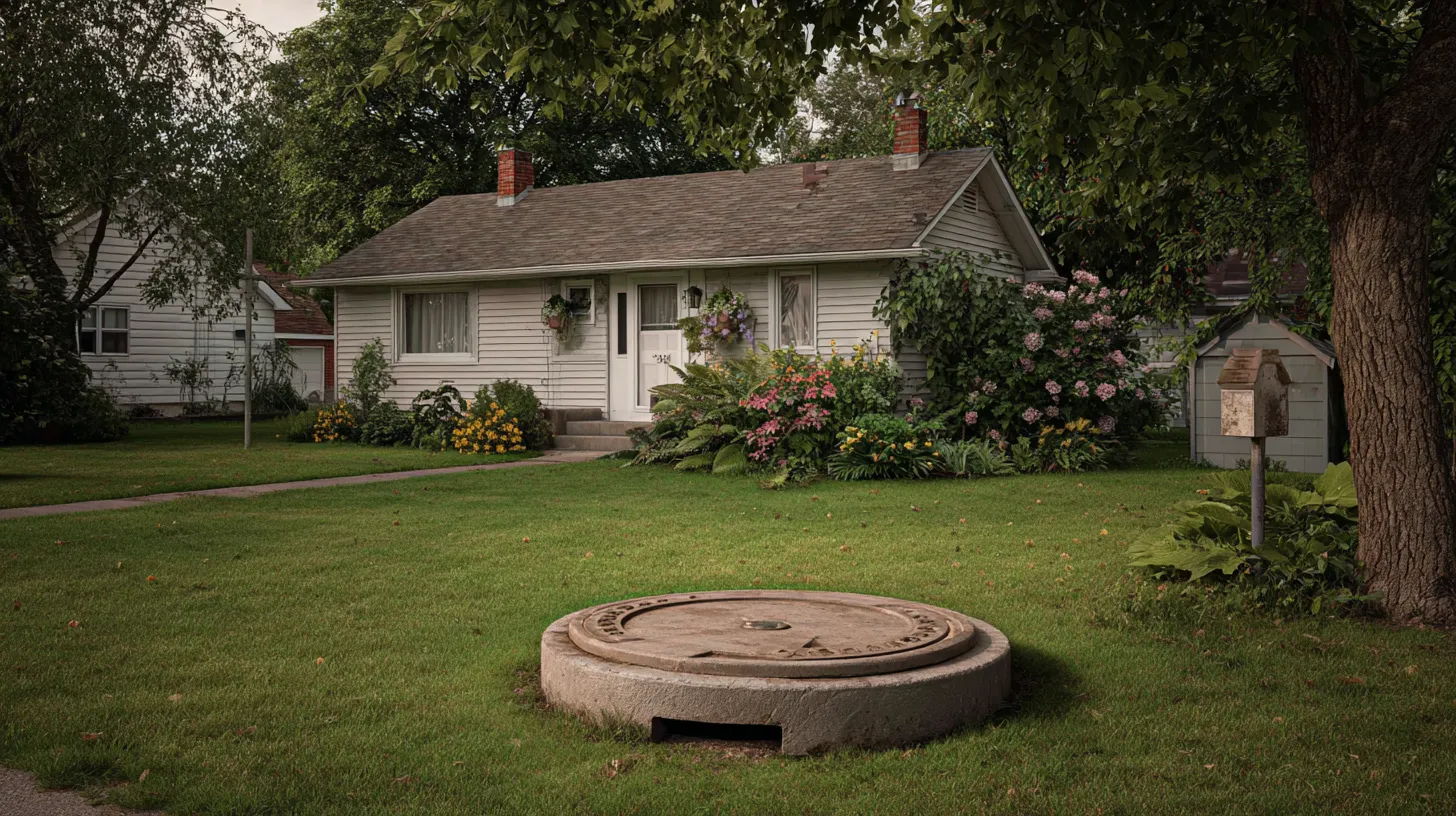
- Underground water service line — the Type K copper or older pipe between the curb stop and the meter leaks into the soil of the yard.
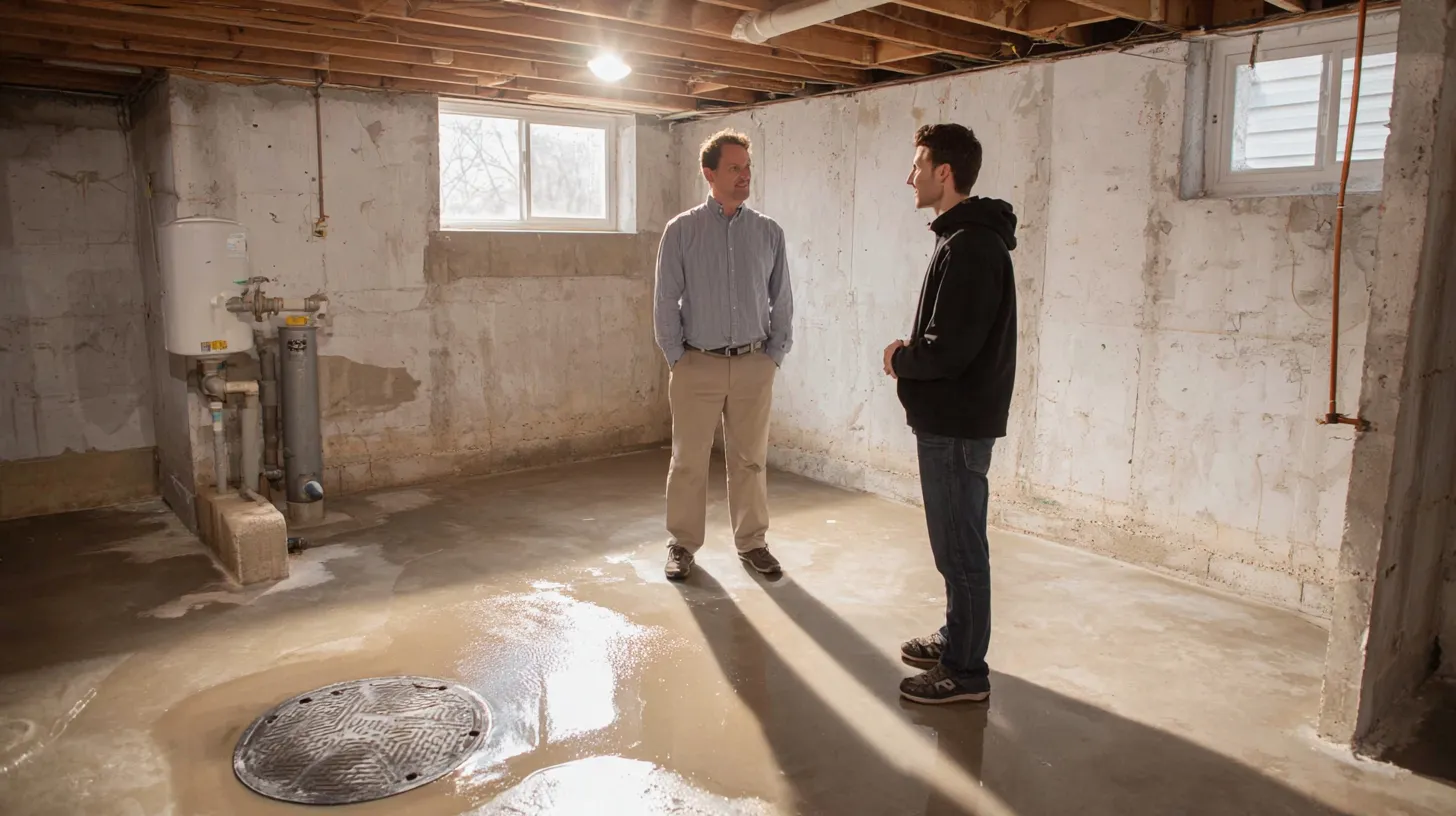
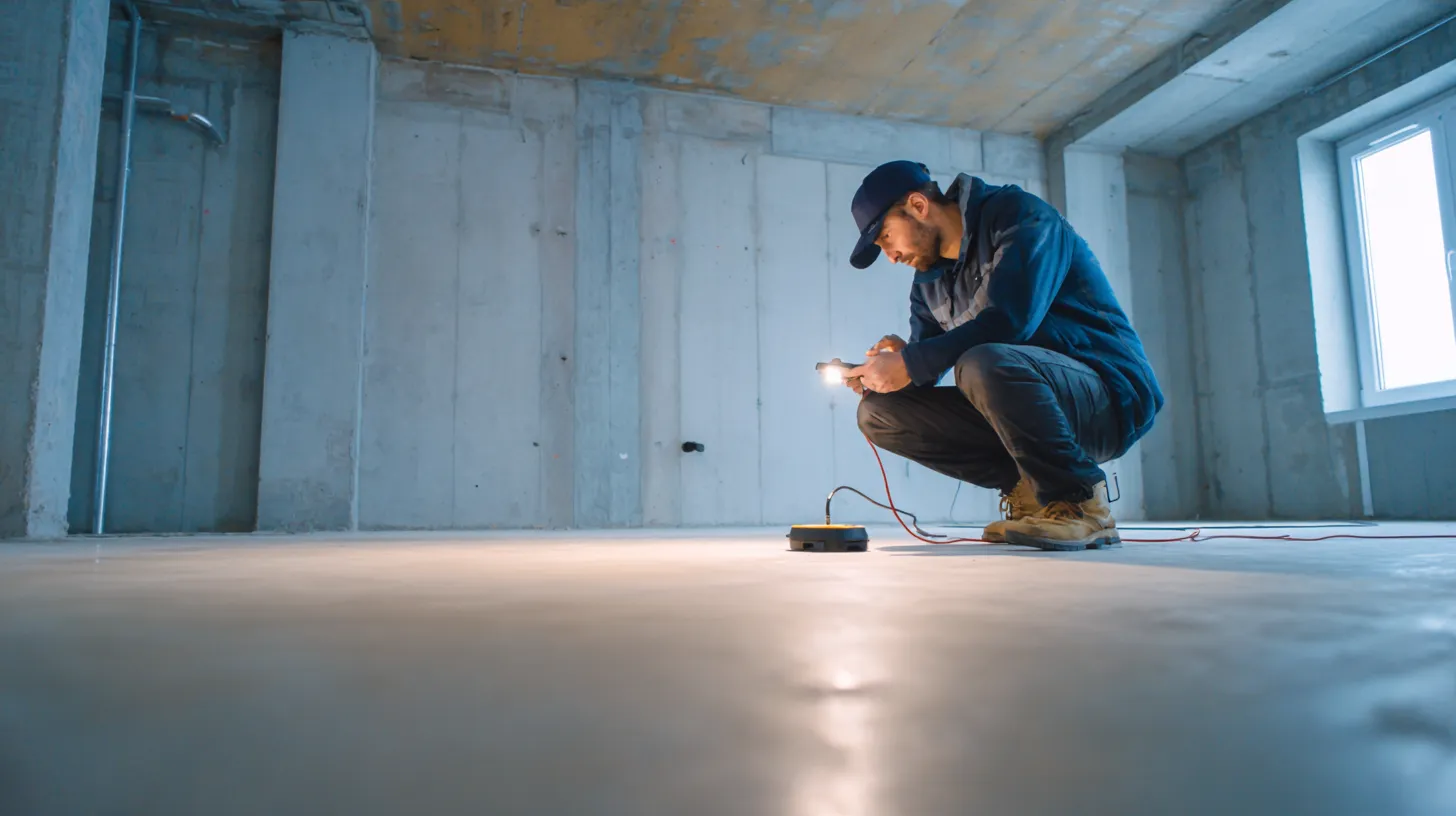
- Pipe under a basement slab — a supply line set in or under concrete leaks into the floor.
- Toilet and faucet fixtures — a worn flapper, fill valve or faucet washer leaks continuously without visible water.
- Appliance and water heater connections — braided supply lines, ice maker tubing and heater fittings leak at their joints.
Accessibility sets the price of the repair. A pipe in an open basement ceiling gets repaired in place; a pipe in a finished wall requires cutting drywall; a buried service line requires digging.
Pipe age adds a second layer. The U.S. Census Bureau's American Community Survey (2020–2024) puts 37.5% of Grand Rapids homes before 1940 and the city's median home at 1953; East Grand Rapids follows at 28.8% before 1940. Pre-war homes carry galvanized steel supply pipe that corrodes from the inside and leaks at the threads. Wyoming's median home dates to 1969, Kentwood's to 1983 and Walker's to 1984, where copper and plastic supply lines leak at joints and fittings instead.
Grand Rapids Water Rules and Leak Programs
Grand Rapids water rules decide who repairs a water line leak, how fast it gets repaired and how much of the high water bill the city returns. The Grand Rapids Water System Rules and Regulations (updated January 23, 2026) split the service line at the curb stop:
| Section of the line | Who maintains it |
|---|---|
| Water main to curb stop | Grand Rapids Water System |
| Curb stop (valve at the property line) | Water System; only its staff operate it |
| Curb stop to meter | Property owner |
| Water meter and couplings | Water System |
| Inlet and outlet valves at the meter, and all plumbing past the meter | Property owner |
Sources: Grand Rapids Water System Rules and Regulations, 2026 (§2.2, §7.14); City of Grand Rapids homeowner responsibility page.
Section 7.14 sets the repair clock. When the Water System detects a leak between the curb stop and the meter, it notifies the occupant to arrange a repair, and it terminates service if the repair stays undone 10 days after written notice by mail. A leak that endangers property or causes significant water loss allows an emergency shutoff without that wait.
Three city programs shape the cost of a leak:
- The Residential Leak Adjustment Program (§3.3) credits part of a high water bill caused by a leak on a single-occupancy residential account.
- Lead service line replacement (§7.16, Administrative Policy #17-01) replaces the privately owned part of a leaking lead line at Water System cost.
- Customer-requested meter testing (§10.8) checks whether a high bill comes from a leak or from the meter itself.
The City of Grand Rapids takes leak and lead-line reports at 311 or 616-456-3000. These programs apply to Grand Rapids Water System accounts; other utilities, such as Wyoming's, set their own billing rules.
Warning Signs of Hidden Leaks
Warning signs of hidden leaks appear on the bill, at the meter, on building surfaces and in the yard, often weeks before water shows. Five signs point to a hidden water leak:
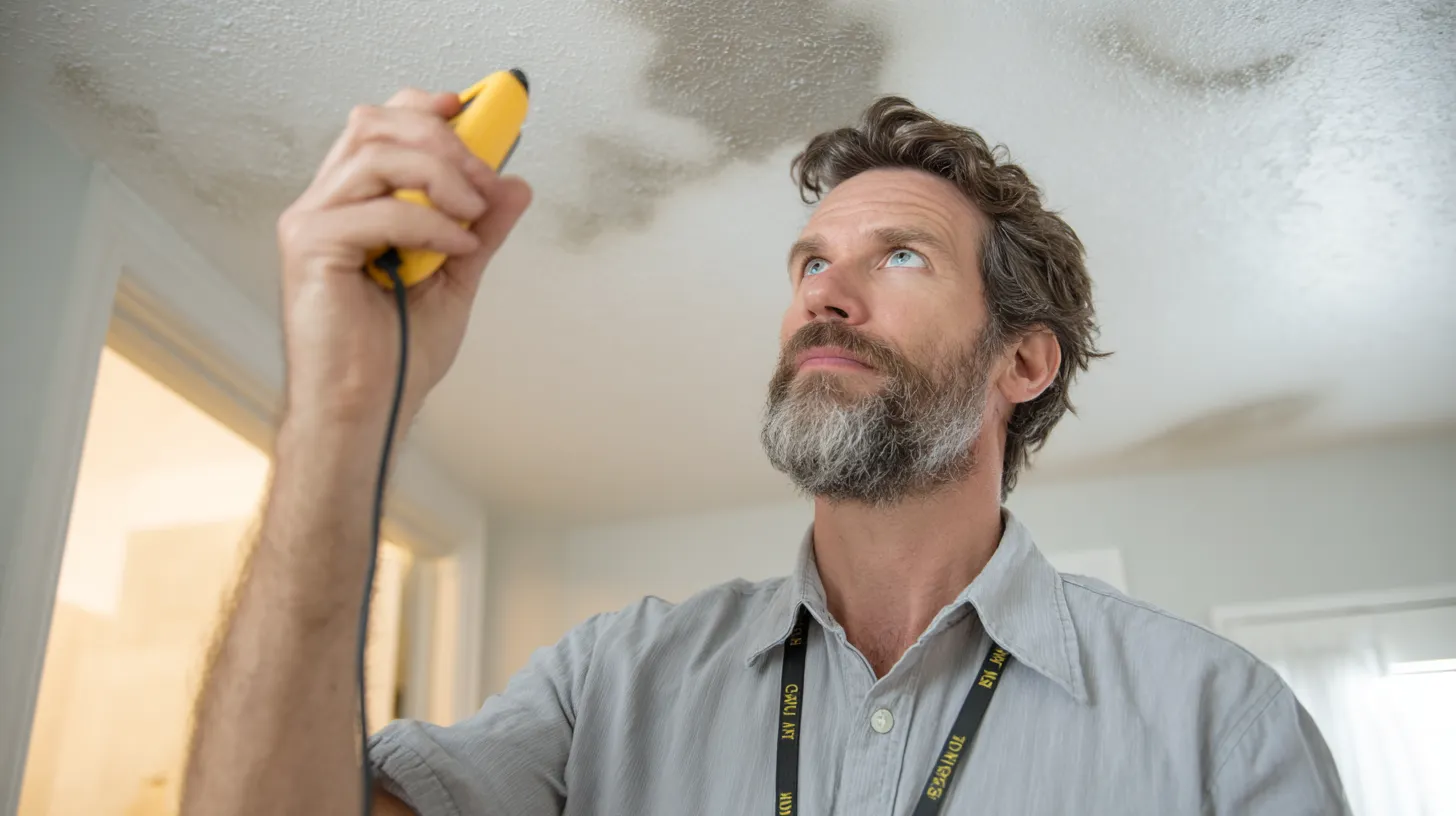
- An unexplained rise on the water bill — the City of Grand Rapids lists an unexplained increase, consistently high use or use that climbs over several billing cycles as a sign of an underground leak.
- A moving leak indicator — the small dial or digital flow indicator on the meter turns while every fixture is off.
- Stains and soft drywall — brown rings on a ceiling below a bathroom, bubbling paint or soft spots in a wall or floor.
- Wet or green yard patches — the city's leak page lists wet spots, pooled water and green, mossy or soft patches surrounded by drier ground.
- A sudden pressure drop — lower flow at every fixture, sometimes with rusty or dirty water or air in the supply.
The city adds less obvious underground-leak signs: brown sprinkler zones, heaving or cracked pavement, sinkholes and uneven floors. Inside, a running-water sound with fixtures off, a musty basement odor and a toilet that refills on its own complete the list.
Seasonality matters in West Michigan. A supply line split during a freeze leaks once the ice melts, so the signs often appear after a cold snap breaks.
Leak Detection Methods and Tools
Leak detection methods narrow a hidden leak from the whole building to one spot before anything gets opened. A leak detection service works through five tools in order of invasiveness:
- Water meter test — EPA WaterSense uses a two-hour window with no water use; a reading that changes during it points to a leak. Closing the house-side valve after the meter separates an inside leak from one in the service line.
- Pressure and isolation test — a gauge on an isolated branch shows whether that section holds static pressure or loses it.
- Acoustic listening device — a ground microphone and headphones pick up the hiss of water escaping a pressurized pipe through soil, concrete or a wall.
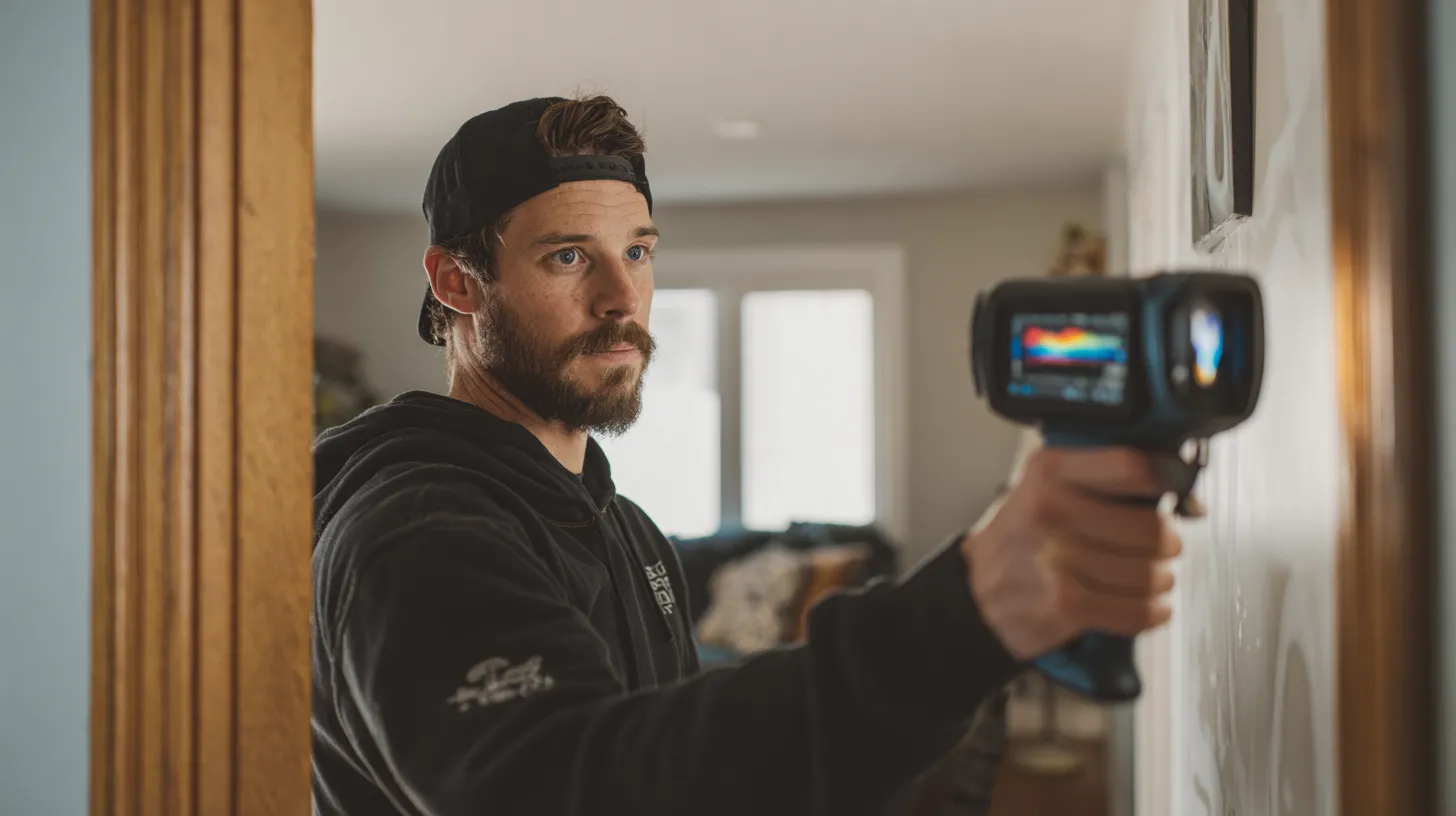
- Thermal imaging camera — an infrared camera shows the temperature difference of wet drywall or of a leaking hot-water line under a slab.
- Moisture meter — a pin or pinless meter confirms which surface holds water and how far the wetting spreads.
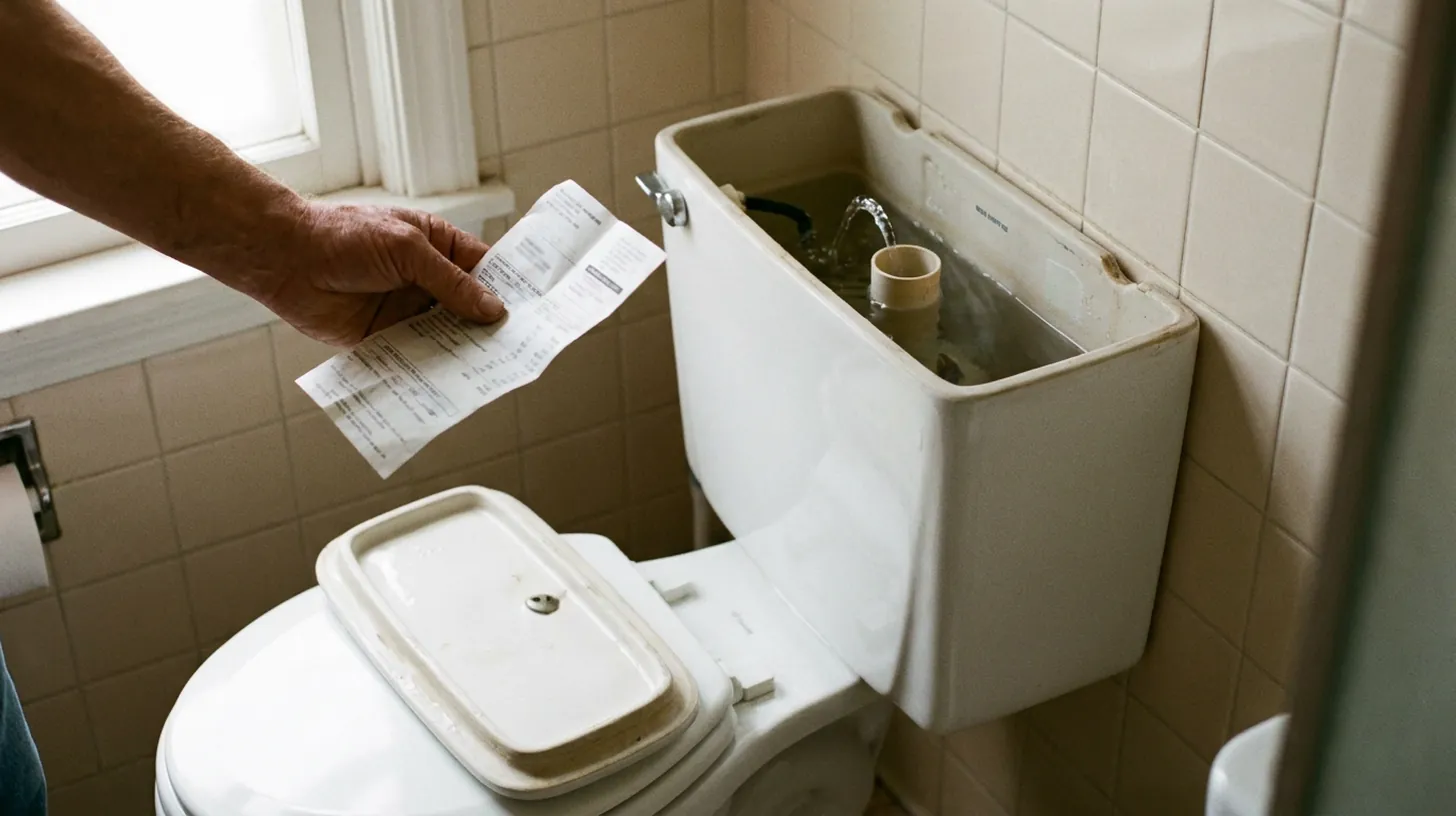
The City of Grand Rapids adds two owner checks. Food coloring in a settled toilet tank that reaches the bowl within 15 to 30 minutes shows a leaking flapper or overflow pipe; EPA WaterSense uses a 10-minute window for the same test. A faucet that seeps at the head or base usually needs a new washer.
Grand Rapids-area leak detection pages describe visits of 1 to 3 hours that end with a marked location, photos and a written report. This Old House's 2026 cost guide, based on HomeAdvisor data, lists slab leak detection at $150 to $600.
Leak Repair Methods
Leak repair methods restore the failed section once detection has marked it. Five methods cover most leaking pipe repair in Grand Rapids:
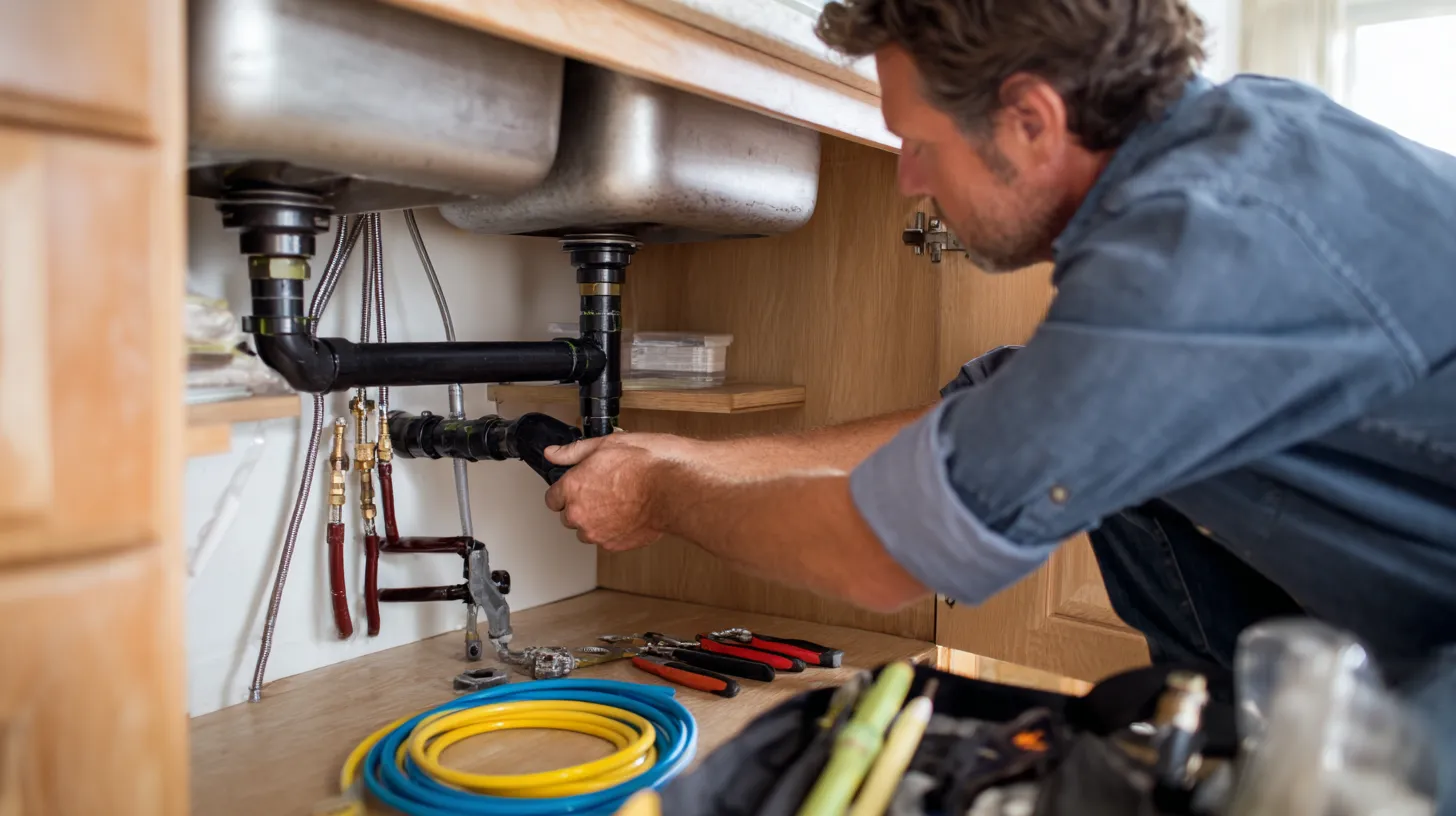
- Section replacement — the plumber cuts out the leaking length of copper, galvanized or plastic pipe and joins new pipe with soldered, press or push-fit fittings.
- Repair coupling — a short split in an accessible run gets a crimp or push-fit coupling.
- Fixture and valve replacement — a new flapper, fill valve, faucet cartridge, angle stop or braided supply line ends a fixture leak.
- Water service line replacement — a new line between the curb stop and the meter, inspected by the Water System before backfill.
- Rerouting and repiping — a line under a slab moves overhead, or a corroded system gets replaced throughout.
Cost follows access and scope. A 2026 Michigan plumbing cost guide (askdoss, updated August 2026) and This Old House's 2026 guide list these ranges:
| Job | Typical cost | Source |
|---|---|---|
| Leak repair, accessible pipe | $175–$450 (average $275, 1–2 hours) | askdoss 2026 |
| Leak repair, behind a wall or ceiling | $350–$900 (average $550, 2–4 hours) | askdoss 2026 |
| Toilet flapper or fill valve, professional | $100–$200 | askdoss 2026 |
| Broken pipe repair | $200–$2,000 | This Old House 2026 |
| Water line repair | $300–$1,400 | This Old House 2026 |
| Slab leak repair | $630–$4,400+ (average $2,300) | This Old House 2026 |
| Rerouting plumbing | $1,500–$15,000 | This Old House 2026 |
| Whole-house repipe, PEX | $4,000–$7,500 | askdoss 2026 |
| Whole-house repipe, copper | $5,000–$9,000 | askdoss 2026 |
Grand Rapids-area service calls add $65 to $100 during regular hours in the same Michigan guide. A repaired branch holds pressure before the main valve reopens, and a second meter reading confirms the leak has stopped.
Grand Rapids Credits 25% of the Water Usage Charge on the Highest Leak Bill Once Every 24 Months
The Grand Rapids Water System bears up to 25% of the water usage on the highest quarterly bill after a qualifying leak, and the customer pays the remaining 75%. Section 3.3 of the 2026 rules sets the conditions:
| Requirement | Rule |
|---|---|
| Property | Single-occupancy residential customer |
| Frequency | One leak adjustment every 24 months |
| History | Four quarters of billing history; account active, not in cutoff or final status |
| Leak size | Use during the leak period above three times normal, based on average daily use in the same quarter last year |
| Proof of repair | Quarterly use back within 5 units of last year's quarter, read in the second or third quarter after the repair |
| Timing | Pre-screen online or at 311 / 616-456-3000; application completed within 30 days |
| Exclusions | Sewer charges; leak amounts already sent to property taxes |
One unit equals 100 cubic feet, or 748 gallons, so "within 5 units" means within 3,740 gallons of last year's quarter. The credit lands on the next quarterly bill, and the bill under review still comes due on time. A property with a swimming pool provides proof of repair by a licensed plumber when the city asks for it. The credit form also asks for at least a year of past bills.
Grand Rapids Replaces a Leaking Lead Service Line at No Cost to the Owner
The Grand Rapids Water System replaces the privately owned portion of a lead water service line at its own cost when a leak or failure appears on either the private or the city portion of the line. Section 7.16 of the 2026 rules carries out Administrative Policy #17-01, which also triggers replacement whenever the Water System replaces its own portion of a lead line. The city budgeted $11.4 million for private-side lead line work in fiscal year 2027. A 2026 Michigan cost guide puts a homeowner-paid private-side lead replacement at $3,000 to $6,000, so a leak on a lead line changes the bill from thousands of dollars to none. Owners report a suspected lead-line leak to 311 or 616-456-3000 and name it as a lead line. Piping from a primary home to a secondary dwelling on the same lot stays the owner's repair, whatever its material.
Grand Rapids Gives Owners 10 Days After Written Notice to Repair an Owner-Side Leak
A leak between the curb stop and the meter belongs to the owner, and the Grand Rapids Water System allows 10 days after written notice for the repair. Section 7.14 of the 2026 rules directs the Water System to notify the occupant or customer when it detects leakage on that section, then terminate service if proper repairs remain undone after 10 days. Danger to property or significant water loss allows an immediate emergency shutoff. The same section covers fire protection services, which owners maintain along their full length. A repaired or replaced service line gets a Water System inspection before backfill, and a contractor's new water service carries a one-year guarantee on materials and workmanship under §7.15. The 10-day window therefore covers locating the leak, scheduling the excavation and passing inspection.
A Grand Rapids Water Meter Counts as Accurate When It Registers Within 5% of the Water Passing Through It
A high bill points to a leak or to the meter, and Grand Rapids tests the meter on request. Section 10.8 of the 2026 rules treats a meter as accurate when it registers within 5% of the actual water passing through it. Appendix II sets the customer-requested meter testing fee at $200 for meters up to 1 inch, $250 for 1½-inch meters and $455 for 2-inch meters, plus a $75 service on/off fee, since the water stays off at the curb during the test. When the meter over-registers beyond the accepted range, the city refunds the fee and sets a new meter; when it reads correctly, the owner also pays for the replacement meter. A two-hour no-use meter test at home answers the same question first at no cost.
Household Leaks Waste More Than 9,300 Gallons a Year in the Average U.S. Home
EPA WaterSense puts the average household's leak losses above 9,300 gallons a year and national household leaks near 1 trillion gallons a year. Nine percent of homes have leaks that waste 50 gallons or more a day, and fixing easily corrected leaks saves about 10% on water bills.
| Leak | Water wasted |
|---|---|
| Faucet dripping once per second | More than 3,000 gallons a year |
| Showerhead dripping 10 times a minute | More than 500 gallons a year |
| Irrigation leak 1/32 inch across | About 6,300 gallons a month |
| Family of four, winter month, above 12,000 gallons | Signal of a serious leak |
Source: EPA WaterSense, Fix a Leak Week (2026).
At Grand Rapids' 748-gallon billing unit, 9,300 gallons equals about 12 units a year. EPA recommends replacing a toilet flapper at least every five years, because a worn flapper leaks silently into the bowl.
Frequently Asked Questions
How Does A Water Meter Reveal A Hidden Leak?
A meter that keeps moving with every fixture off shows water leaving the system. EPA WaterSense uses a two-hour no-use window: a reading that changes during it points to a leak. Closing the valve after the meter then shows whether the leak sits inside the building or in the service line.
How Does A Toilet Dye Test Find A Leak?
A few drops of food coloring go into the toilet tank once it fills and settles. The Grand Rapids Water System treats color in the bowl within 15 to 30 minutes as a leak, usually at the flapper or overflow pipe. Both parts cost little to replace.
Who To Call For A Water Leak In The Yard In Grand Rapids?
The side of the curb stop decides it. The city maintains the main, the curb stop and the meter, and 311 or 616-456-3000 reaches the Water System. The owner maintains the curb stop-to-meter line, and a plumber repairs that section; the city shuts off service if it stays unrepaired 10 days after written notice.
Does Grand Rapids Credit A Water Bill After A Leak?
Yes, for single-occupancy residential accounts. The Residential Leak Adjustment Program credits up to 25% of the water usage on the highest leak bill, once every 24 months, when use tops three times normal and returns to normal after the repair. Sewer charges stay unadjusted.
What Happens When A Lead Service Line Leaks In Grand Rapids?
The Grand Rapids Water System replaces the privately owned part of the lead line at no cost to the owner, under Administrative Policy #17-01. Owners call 311 or 616-456-3000 and report the leak as a lead line, and the city guides the replacement.
Common Misconceptions About Leak Detection and Repair
Misconception: A High Water Bill Always Means The Household Used More Water
A leak raises usage without any change in habits. The City of Grand Rapids lists an unexplained bill increase, or usage that climbs over several billing cycles, as a sign of an underground leak. EPA WaterSense treats a winter month above 12,000 gallons for a family of four as a signal of a serious leak.
Misconception: Finding A Hidden Leak Requires Opening Walls And Floors
Meter tests, pressure isolation, acoustic listening and thermal imaging narrow a hidden leak to one spot before any cut. Grand Rapids-area leak detection visits run 1 to 3 hours and end with a marked location. Drywall or concrete opens once, at the leak, instead of across a whole room.
Misconception: Repair Tape Or Epoxy Putty Permanently Fixes A Pressurized Pipe Leak
Tape and putty slow a drip on the outside of the pipe while the corrosion or crack that caused it stays in place. City water pressure keeps pushing against the patch. A cut-out section, a repair coupling or a new fitting restores the pipe wall itself.
Misconception: A Slow Drip Wastes Too Little Water To Matter
EPA WaterSense puts one drip per second from a faucet at more than 3,000 gallons a year. The average U.S. household loses more than 9,300 gallons a year to leaks, and 9% of homes lose 50 gallons or more a day. Small leaks add up on a quarterly bill.
Misconception: A Grand Rapids Leak Credit Also Refunds The Sewer Charge
The Residential Leak Adjustment Program adjusts water consumption only. Section 3.3 of the 2026 Water System rules states that sewage adjustments do not qualify, and §3.6 states that sewer service during a leak is not refunded as a charge in error. The sewer portion of a leak bill stays with the owner.
Ongoing Debates in Leak Detection and Repair
Non-invasive detection and exploratory opening divide owners facing a hidden leak. Acoustic and thermal detection pinpoint the spot first and limit drywall and concrete work to one opening. Exploratory opening skips the detection fee when a stain sits directly under a short, accessible run. The leak's location and the finish over it settle the choice.
Spot repair and repiping divide owners of older homes. A spot repair fixes one failed joint for $175 to $450 when the pipe is accessible, according to a 2026 Michigan cost guide. A whole-house repipe, $4,000 to $7,500 in PEX in the same guide, removes an aging copper or galvanized system that keeps producing pinhole leaks. Pipe age and leak count decide.
PEX and copper divide plumbers choosing replacement pipe. PEX bends around framing, installs with fewer joints and resists splitting when water freezes. Copper resists rodent and sunlight damage and carries a longer service record in Grand Rapids homes. Copper repipes cost more, at $5,000 to $9,000 in the 2026 Michigan guide.
Smart water shutoff valves and manual monitoring divide leak-prevention plans. A smart shutoff valve, $300 to $600 installed in the 2026 Michigan guide, closes the supply when it senses abnormal flow, even with nobody home. Manual monitoring of the meter and the quarterly bill costs nothing but catches a leak only after it runs.
Detection-only specialists and full-service plumbers divide the leak detection market around Grand Rapids. A detection-only company hands the owner a neutral report to take to any plumber. A plumber who detects and repairs finishes the job in one visit and one bill. The owner's need for a second opinion and the urgency of the leak decide which model fits.
Components of a Grand Rapids Leak Detection and Repair
Every leak detection and repair works through the same five components. The curb stop is a component of the water service line; it marks the boundary between city and owner responsibility in Grand Rapids, and only Water System staff operate it. The leak indicator dial is a component of the water meter register, and its movement with every fixture off gives the first proof of a hidden water leak. The flapper is a component of the toilet tank; when worn, it lets tank water slip into the bowl and refill without end. The angle stop valve is a component of a fixture supply connection, where it isolates one sink or toilet so a plumber repairs that fixture without shutting off the building. The soldered joint is a component of copper distribution piping, and corrosion or movement at that joint produces many pinhole and seep leaks inside walls. The plumber identifies which component failed before choosing between a fixture repair, a section replacement and a new service line.
Summary
Leak detection and repair in Grand Rapids covers five areas: leak locations, the city's water rules and leak programs, warning signs, detection methods and repair methods. Ownership drives the response: the Water System maintains the main, curb stop and meter, while the owner repairs the curb stop-to-meter line within 10 days of written notice. Grand Rapids credits 25% of the water usage charge on the highest leak bill once every 24 months and replaces leaking lead service lines at no cost. Leak detection and repair starts with the water meter and ends with a pressure-tested pipe and a meter that stops moving.