Residential Plumbing in Grand Rapids: The Complete Guide

Residential plumbing is the system of supply pipes, drains, vents, fixtures and water heating equipment that brings clean water into a home and carries wastewater out. A residential plumber repairs, replaces and inspects that system, from the water service line in the yard to the last faucet upstairs. In Grand Rapids, Michigan, the work follows three local forces: an ownership line at the curb stop, a housing stock with a 1953 median build year, and freeze-thaw winters that test every exposed pipe. Residential plumbing in the Grand Rapids area also runs through city permit rules and four city programs that change what a repair costs.
Water Service and Sewer Connections
Water service and sewer connections link a home's plumbing to the public system, and they decide who pays for each repair. Five parts matter most: the curb stop, the water service line, the lead service line, the sewer lateral and the footing drain.
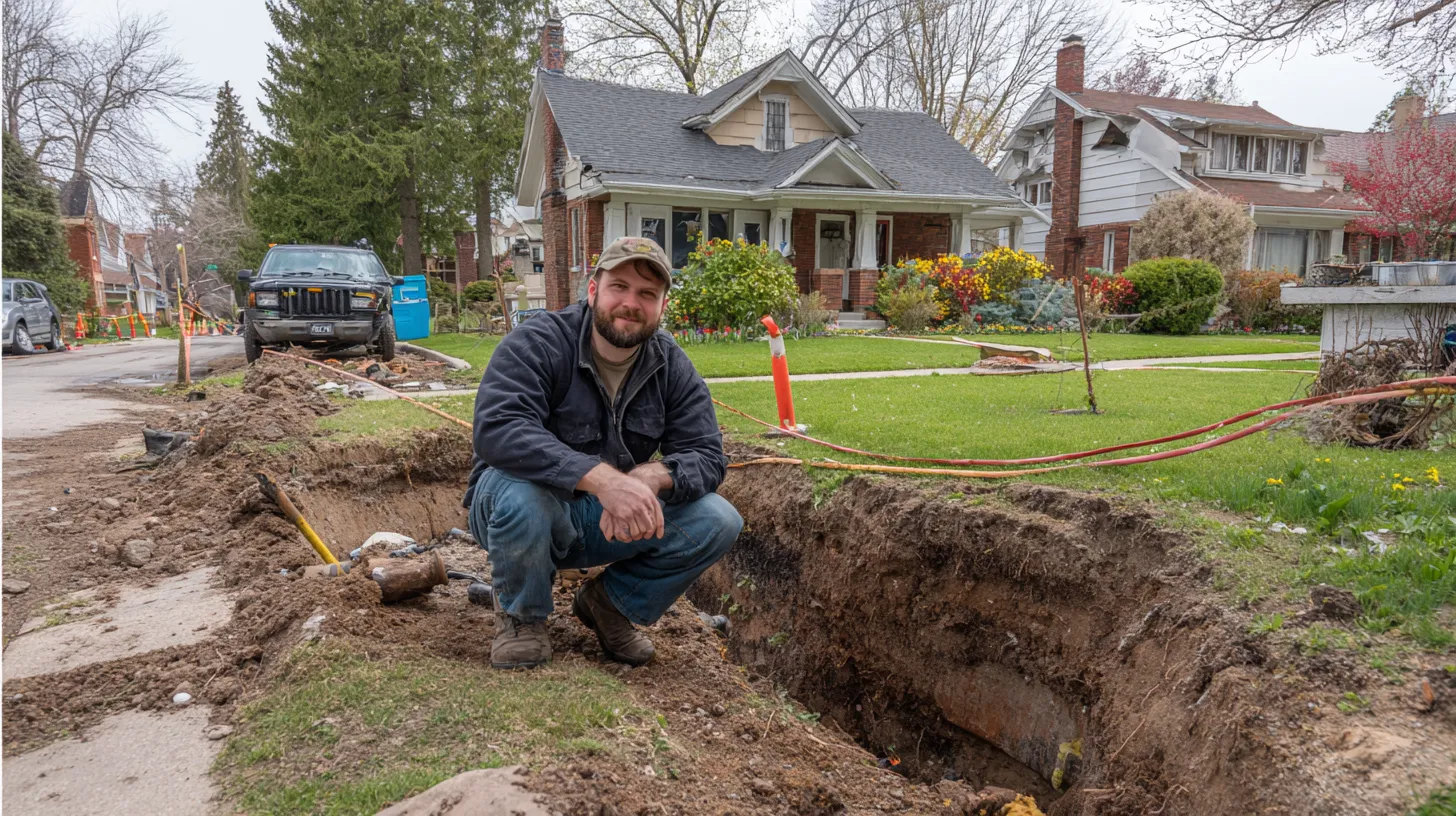
The City of Grand Rapids draws the ownership line at the curb stop. The owner's responsibility begins at the property line after the curb stop and continues through the yard to the home and throughout the home (City of Grand Rapids, Homeowner Responsibility page; Water System Rules §7.13):
| Section | Who maintains it |
|---|---|
| Water main to curb stop | City of Grand Rapids |
| Curb stop | City; only Water System staff operate it |
| Curb stop to meter (the yard section) | Property owner |
| Water meter and the couplings on each side | City of Grand Rapids |
| Valves on each side of the meter and all plumbing inside | Property owner |
Sources: City of Grand Rapids Homeowner Responsibility page; Grand Rapids Water System Rules and Regulations, 2026.
Two rules follow from that split. When the Water System finds a leak on the owner's section, it sends written notice and shuts off service if the leak stays unrepaired for 10 days. The city bills unauthorized curb stop operation, including by contractors, at double the water rate plus a penalty. A leak in the yard therefore lands on the owner's repair list, while a city-side failure goes to 311 or 616-456-3000.
The sewer side works through the lateral, the pipe from the building drain to the public sewer. Clay tile laterals in older neighborhoods admit roots, and footing drains tied into the lateral overload it during storms. Main-line backups belong to sewer line repair.
Basement and Utility Room Plumbing
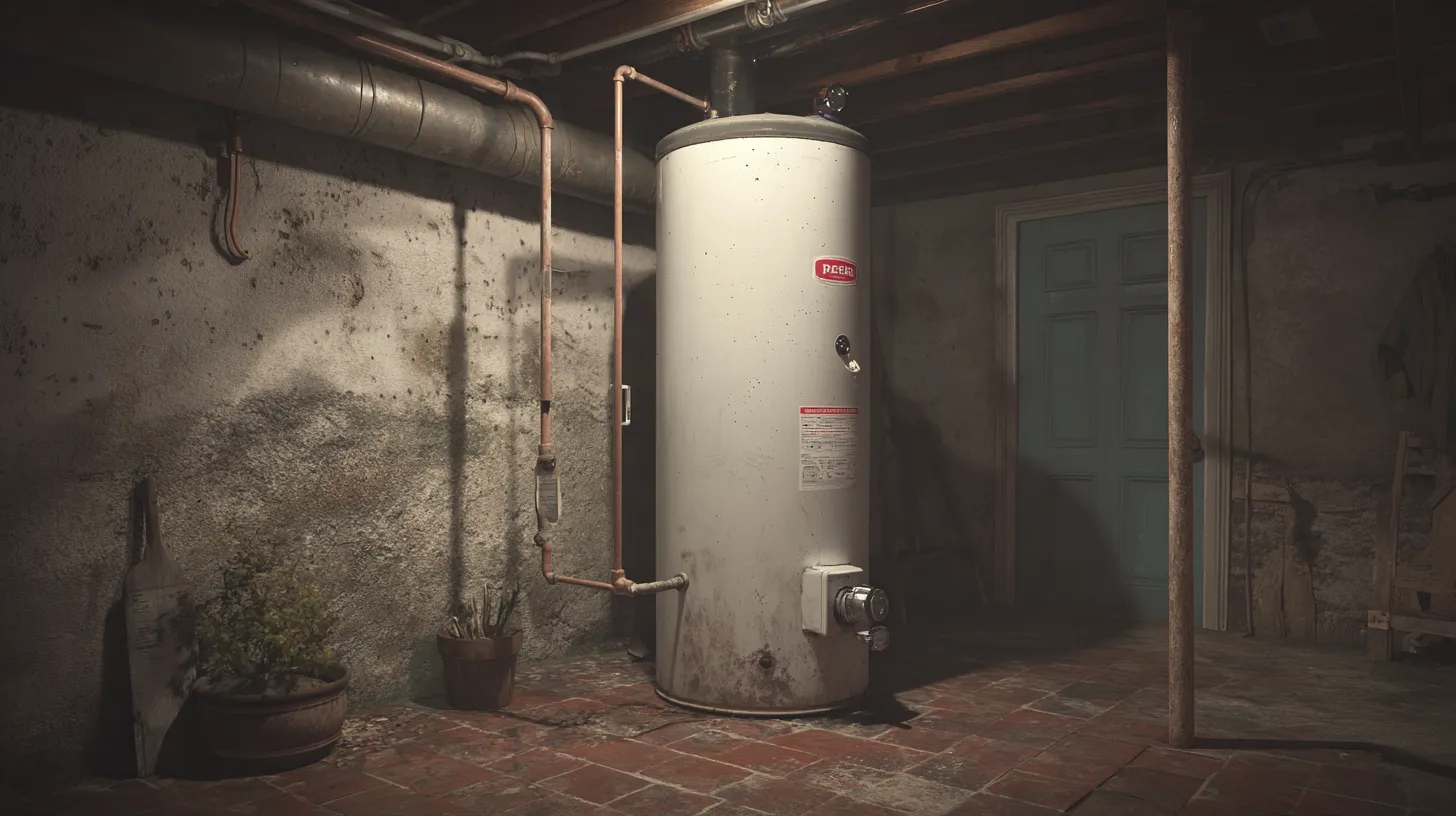
Basement and utility room plumbing holds the controls of the whole home water system: the meter setting, the water heater, the sump pump, the floor drain and the main sewer cleanout. Most residential plumbing calls in a Grand Rapids house either start here or get diagnosed here.
The meter setting comes first. Grand Rapids Water System rules require a valve on each side of the water meter, so an owner shuts off the house without waiting for the city. A valve that will not close turns a small leak into an emergency, which is why the emergency plumbing guide treats a yearly valve test as routine.
The water heater sets the next maintenance clock. The U.S. Department of Energy puts storage water heater life at 10–15 years and tankless units above 20, and Grand Rapids' hard water shortens the low end. Leaks, no hot water and relief-valve discharge belong to water heater repair.
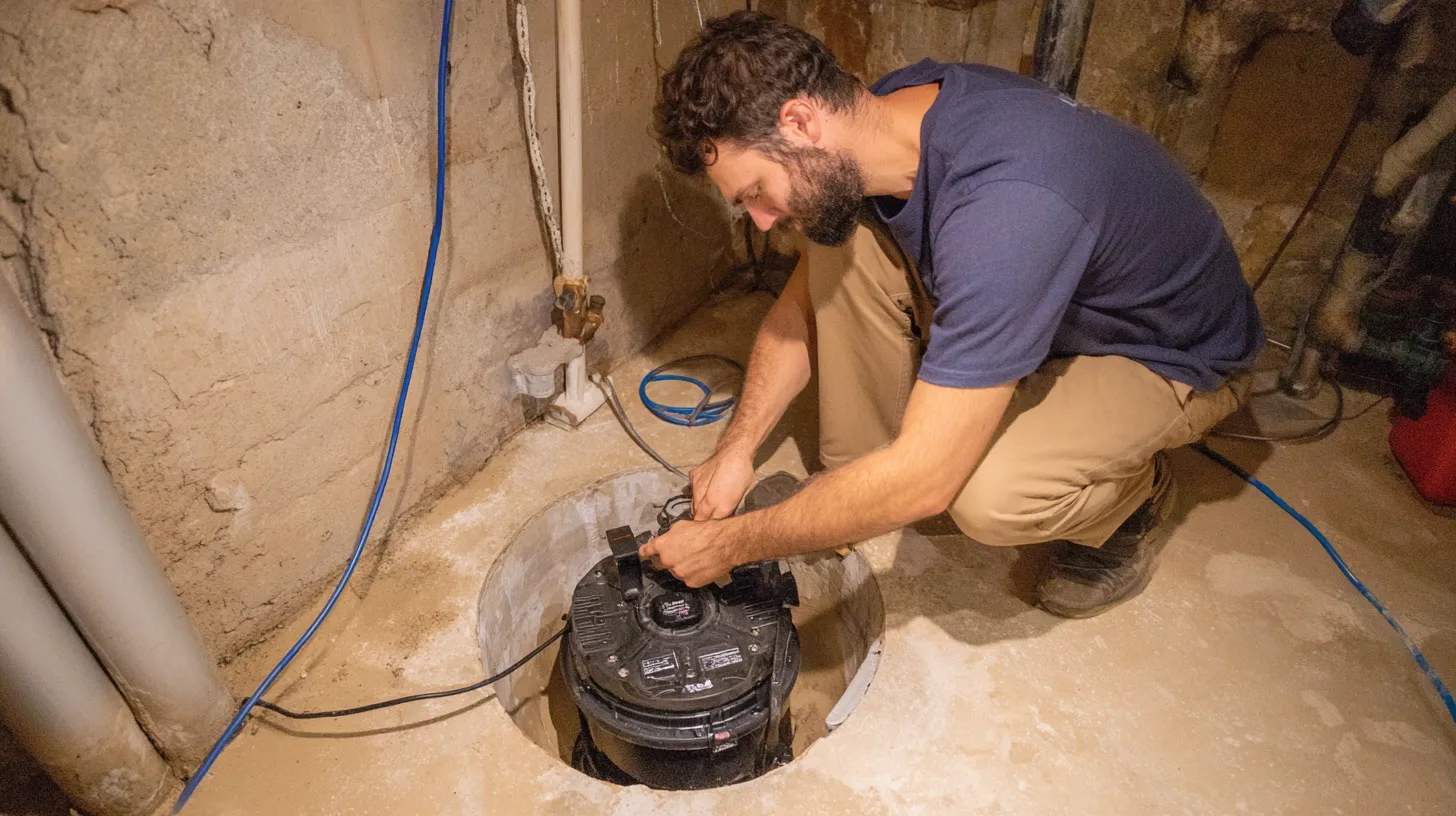
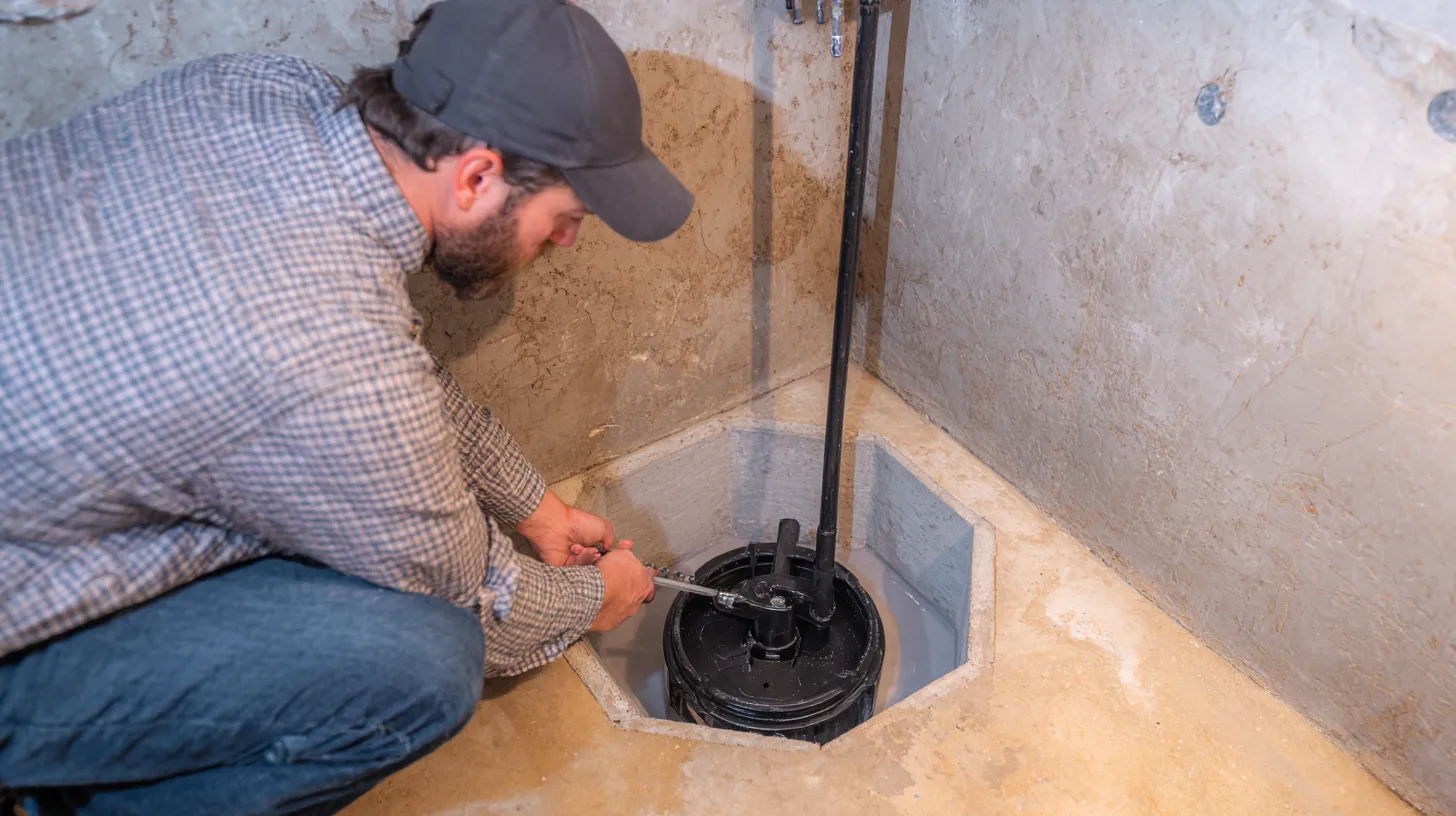
The sump pump and floor drain handle water from outside the supply system. Clear water rising in the sump pit points to groundwater and a pump problem (sump pump repair); water at the floor drain points to the sewer; standing water across the floor points to flooded basement repair. The main sewer cleanout gives a plumber access to clear the building drain without opening a fixture.
Kitchen and Bathroom Plumbing
Kitchen and bathroom plumbing carries the fixtures a household uses every day, so it produces the most frequent residential repairs. Five fixtures account for most of them: the kitchen sink and faucet, the garbage disposal, the toilet, the shower and tub valve and the lavatory sink drain.
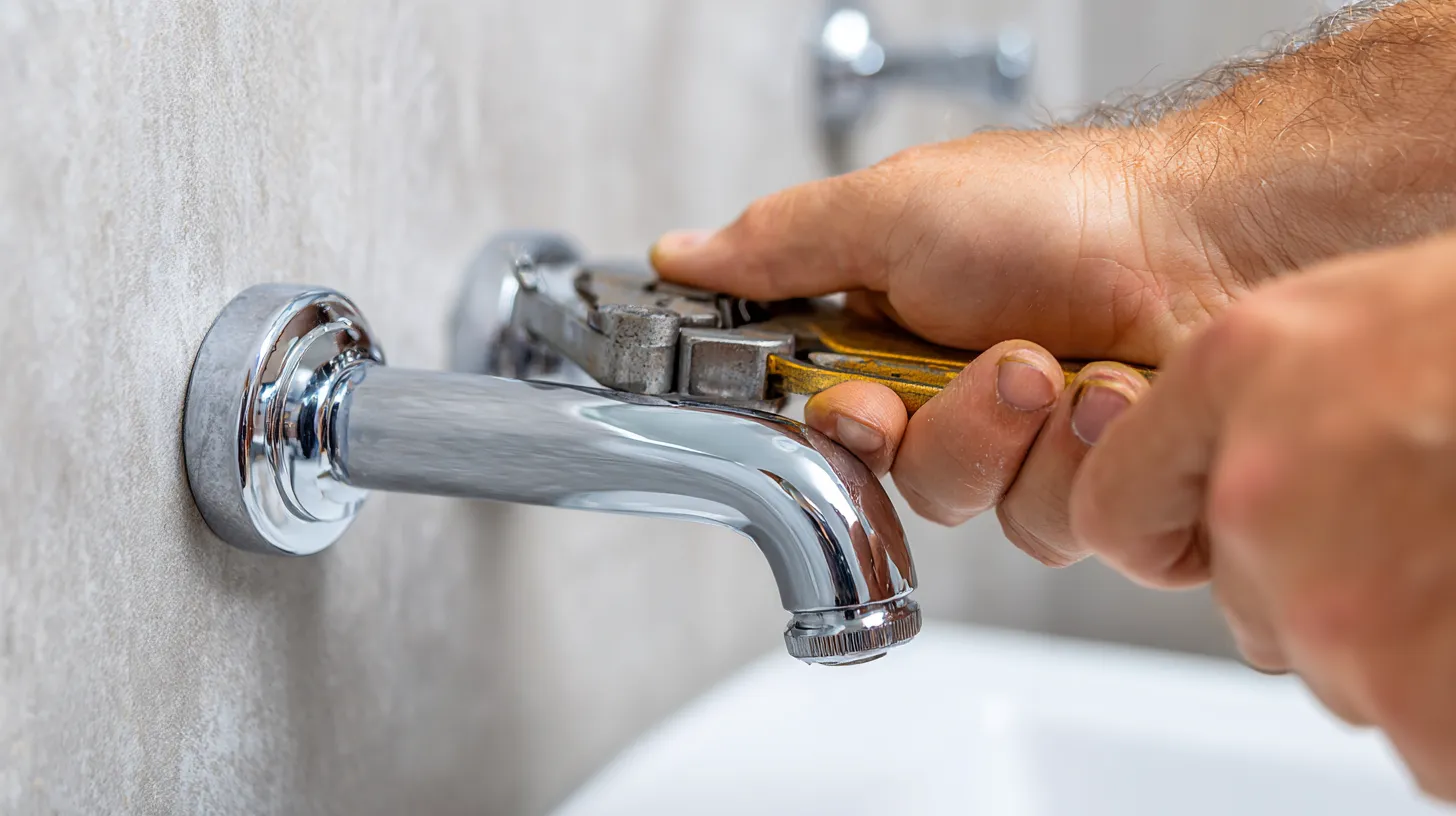
Each fixture fails in a predictable way:
- Faucets drip at worn cartridges or washers and leak at supply lines under the cabinet (faucet and sink repair).
- Garbage disposals jam, hum without turning or leak at the sink flange (garbage disposal repair).
- Toilets run at a worn flapper or fill valve and rock on a failed wax ring (toilet repair).
- Shower and tub valves drip at the spout or lose temperature balance.
- Sink drains slow at the P-trap from hair, soap and grease (drain cleaning).
Hard water shapes all five. The City of Grand Rapids' 2025 water analysis measured total hardness at 142 mg/L, which the U.S. Geological Survey classes as hard, so scale builds on aerators, showerheads and cartridges. EPA WaterSense recommends replacing a toilet flapper at least every five years, because a worn flapper leaks silently into the bowl.
A 2026 Michigan cost guide (askdoss, updated August 2026) lists toilet replacement at $250–$600, faucet replacement at $200–$500 and disposal replacement at $250–$550.
Laundry and Outdoor Plumbing
Laundry and outdoor plumbing sits at the edges of the home system, where supply lines meet appliances, exterior walls and the yard. Five parts define it: washing machine supply hoses, the laundry standpipe, the hose bib, the lawn irrigation backflow preventer and supply lines inside exterior walls.
The laundry standpipe receives the washer's pumped discharge. The 2021 Michigan Plumbing Code sets the standpipe 18–42 inches above its trap, and lint narrows the 2-inch trap until the washer overflows it. Supply hoses stay under city pressure around the clock, so a burst hose floods a laundry room until the valve closes.
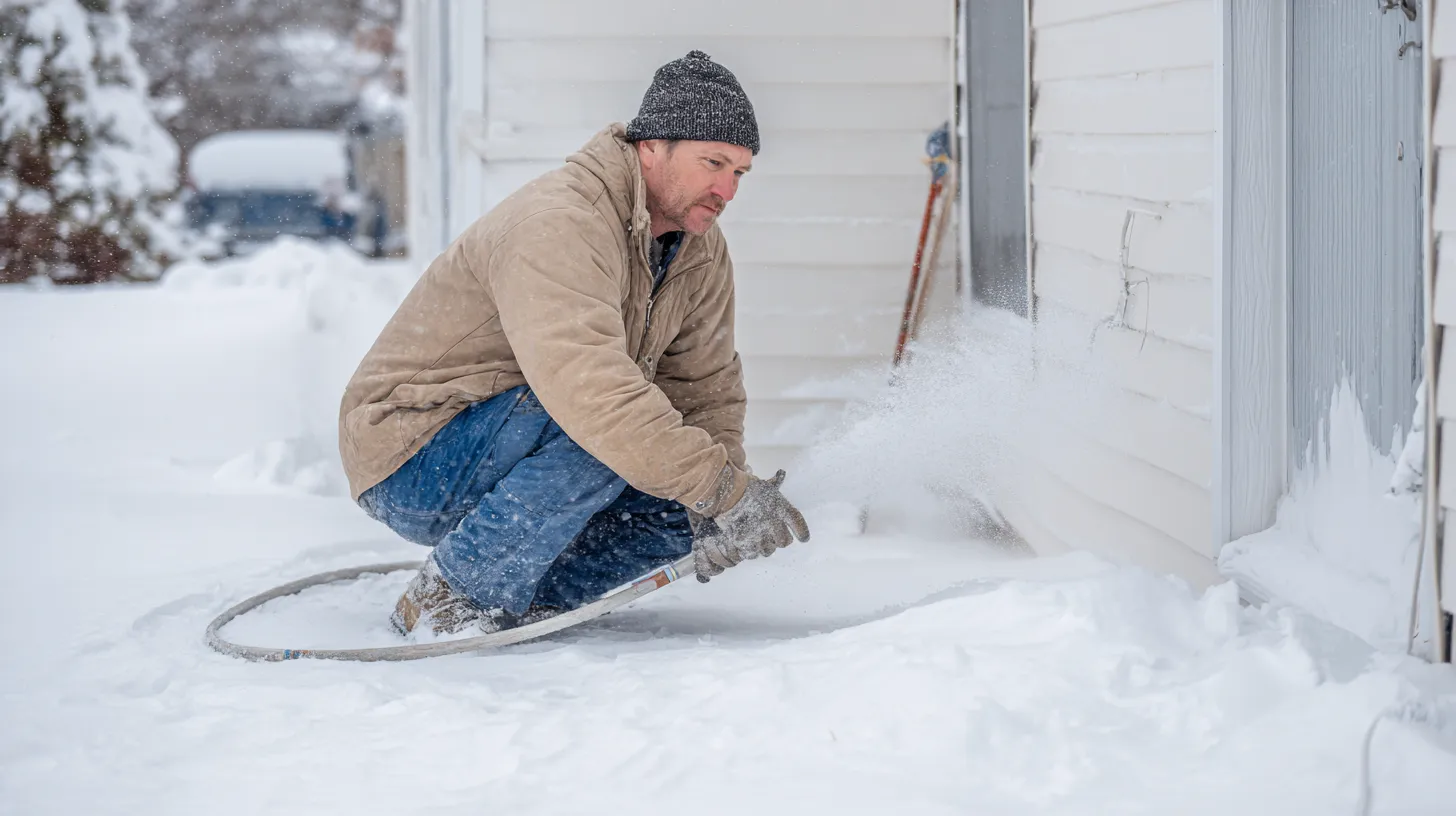
Outdoor plumbing freezes first. A hose left attached to a hose bib traps water in the valve body, and Boshart's winterizing steps remove the hose, close the faucet's indoor shutoff, open the outdoor faucet and open the indoor valve's drain cap to empty the line. A split found after a thaw belongs to burst and frozen pipe repair.
Lawn irrigation adds a backflow rule that varies by utility:
- City of Wyoming requires a backflow device on every irrigation system and tests residential lawn-sprinkler devices on a 5-year cycle.
- Plainfield Township requires lawn-irrigation backflow preventers tested at least every 3 years by an ASSE-certified tester.
The serving utility therefore decides the outdoor maintenance schedule as much as the season does.
Pipe Materials in Grand Rapids Homes
Pipe materials in Grand Rapids homes follow the year each house was built, and material decides how the plumbing fails. Five materials cover most homes: galvanized steel supply pipe, copper supply pipe, PEX supply pipe, cast iron drain stacks and clay tile sewer laterals.
Pre-war homes carry threaded galvanized steel that corrodes from the inside, narrows and leaks at the threads, alongside cast iron hub-and-spigot stacks and clay laterals. Mid-century homes moved to copper supply lines that leak at joints and fittings. Repipes and newer homes use PEX, a flexible plastic tubing joined with crimp or expansion fittings.
Housing age differs sharply across the metro. The U.S. Census Bureau's American Community Survey (2020–2024) reports:
| Town | Median year built | Homes built before 1940 |
|---|---|---|
| Grand Rapids | 1953 | 37.5% |
| East Grand Rapids | 1954 | 28.8% |
| Wyoming | 1969 | 10.4% |
| Kentwood | 1983 | 2.3% |
| Walker | 1984 | 5.3% |
Source: U.S. Census Bureau, ACS 2020–2024 (via Census Reporter).
A whole-house repipe replaces the remaining galvanized or corroded system at once. The same 2026 Michigan cost guide lists a PEX repipe at $4,000–$7,500 and a copper repipe at $5,000–$9,000, against $175–$450 for an accessible single leak repair.
A Grand Rapids Owner's Water Line Responsibility Begins at the Curb Stop and Runs Through the Whole House
The owner's share of a Grand Rapids water line starts at the property line after the curb stop and covers the yard section, the valves at the meter and every pipe and fixture inside. The city keeps the main, the curb stop, the meter and the meter couplings. That split sends most residential plumbing repairs to the owner, including a leaking service line under the lawn. The Water System allows 10 days after written notice for an owner-side leak repair, and only its staff turn the curb stop. Grand Rapids buries water services with five feet of cover, so a yard repair means excavation and a Water System inspection before the trench closes.
Grand Rapids Homeowners Pull Plumbing Permits Only for Homes They Occupy
The Grand Rapids permit application limits owner-pulled plumbing permits to work in a house the owner occupies; all other work needs a licensed installer. The city's Development Center issues the permits, and its application lists water heaters, backwater valves, backflow preventers and sumps. Permitted work stays uncovered and unused until inspected. Suburbs run their own offices: Kentwood through its Inspections Department, Ada Township and East Grand Rapids through Cascade Township's building department, and Walker, Grandville and Rockford through Professional Code Inspections. Wyoming accepts permit applications only from Michigan-licensed contractors and owner-occupants. A landlord's rental unit therefore does not qualify for an owner permit.
Grand Rapids-Area Housing Ranges From a 1953 Median in the City to 1984 in Walker
A three-decade gap separates the median Grand Rapids home from the median Walker home, and the plumbing inside follows that gap. Grand Rapids' 1953 median and 37.5% pre-1940 share put galvanized supply pipe, cast iron stacks and clay laterals in a large share of city houses. Wyoming's 1969 median points to copper supply and early plastic drains. Kentwood (1983) and Walker (1984) homes carry copper and plastic throughout, with water heaters, flappers and valves now on their second or third replacement cycle. The same repair request, a low-pressure complaint, points to corroded galvanized in one town and a failing pressure-reducing valve or clogged aerator in another.
Four Grand Rapids City Programs Reduce the Cost of Home Plumbing Repairs
Grand Rapids runs four programs that shift part of a home plumbing repair to the city or the water bill:
- The Lead Line Replacement Program replaces lead service lines, free when a leak appears on the lead line or a city construction project reaches the address; the city budgeted $11.4 million for private-side work in fiscal year 2027.
- Policy 1000-22 helps eligible owners pay for backwater valves on sanitary laterals, footing and roof drain disconnection and sump pumps that discharge to the lawn or storm sewer.
- The Footing Drain Disconnection Program keeps groundwater out of the sanitary sewer; the program generally covers all costs and is mandatory in targeted neighborhoods.
- The Residential Leak Adjustment Program credits up to 25% of the water usage on the highest leak bill, once every 24 months, when use tops three times normal and returns to normal after the repair. Sewer charges stay unadjusted.
For Policy 1000-22, the city decides eligibility: the program covers properties where an overloaded city sewer caused a backup in the past 10 years and properties in areas that add to downstream backups, and a city-hired contractor does the work. A 2026 Michigan cost guide puts a homeowner-paid private-side lead replacement at $3,000 to $6,000, the cost the lead line program removes. These programs apply to Grand Rapids accounts; suburbs on other utilities set their own rules.
Michigan's Freeze-Thaw Seasons Set the Grand Rapids Home Plumbing Calendar
Freeze, thaw and storm seasons time most home plumbing failures in Grand Rapids, so maintenance tied to those seasons prevents the most damage. Grand Rapids recorded -24°F in February 1899 (National Weather Service records), and Michigan sets exterior footings 42 inches below grade for frost.
| Season | Task | Basis |
|---|---|---|
| Fall, before the first freeze | Remove hoses, close indoor hose-bib valves, drain the outdoor faucets | Boshart winterizing steps |
| Winter | Keep heat on in exterior-wall and garage runs; drain the plumbing of a vacant house | Water System rules leave draining a vacant building to the owner |
| Winter | Keep the meter area above freezing | A frozen meter costs the owner $225 (3/4-inch) plus a $75 set fee (Rules 2026) |
| Spring thaw | Test the sump pump; walk exterior-wall and crawl space lines for splits | InterNACHI yearly sump inspection |
| Storm season | Refill rarely used floor-drain traps; clean the backwater valve | Michigan Plumbing Code trap-seal rule; valve maintenance |
| Once a year | Close both meter valves to test them; flush the water heater | Valve each side of the meter (Rules 2026); A. O. Smith yearly flush |
A split pipe usually leaks on the morning of the thaw, not during the cold, so the spring walk-through finds damage while it is small.
Frequently Asked Questions
What Does A Residential Plumber Do In Grand Rapids?
A residential plumber repairs and replaces the water supply, drain and water heating systems of a home. In Grand Rapids that work runs from the curb stop-to-meter service line the owner maintains, through the kitchen, bathrooms, laundry and basement, to the sewer lateral. Specialized problems route to drain, sewer, water heater, sump and leak work.
Who Can Pull A Plumbing Permit For A Grand Rapids Home?
A homeowner pulls a Grand Rapids plumbing permit only for work on a house the owner occupies; all other work goes through a licensed installer. The Development Center issues the permits. Wyoming limits applications to Michigan-licensed contractors and owner-occupants, and other suburbs issue permits through their own offices or contractors.
How Old Is The Plumbing In A Typical Grand Rapids-Area Home?
The answer depends on the town. The Census Bureau's American Community Survey (2020–2024) puts the median Grand Rapids home at 1953, with 37.5% built before 1940. East Grand Rapids follows at 1954, Wyoming at 1969, Kentwood at 1983 and Walker at 1984. Original pipes in a pre-1940 house are usually galvanized steel and cast iron.
Which Utility Supplies Water To A Grand Rapids-Area Home?
The address decides it. Grand Rapids Lake Michigan water reaches the city, Walker, East Grand Rapids, Ada Township and Kentwood east of Breton Avenue; Wyoming's Lake Michigan plant serves Wyoming, Grandville and Kentwood west of Breton. Plainfield Township and Rockford pump groundwater from wells, and parts of Cascade Township rely on private wells.
How Does A Homeowner Prepare An Outdoor Hose Bib For Winter?
Removing the hose comes first, because an attached hose traps water in the valve body. Boshart's winterizing steps then close the faucet's indoor shutoff, open the outdoor faucet to drain it and open the indoor valve's drain cap so the rest of the line empties into a pail.
Common Misconceptions About Residential Plumbing in Grand Rapids
Misconception: Any Homeowner Can Pull A Plumbing Permit For Any Grand Rapids House
The Grand Rapids permit application limits owner-pulled permits to work in a house the owner occupies. Rentals, vacant houses and properties bought to resell need a licensed installer. Wyoming applies the same owner-occupant limit to its permit applications.
Misconception: A Grand Rapids Homeowner Owns The Water Meter
The Grand Rapids Water System maintains the meter and the couplings on each side of it. The owner maintains the valves on each side of the meter, the curb stop-to-meter line and every pipe inside. A frozen meter still becomes an owner charge: $225 for a 3/4-inch meter plus a $75 meter set fee under the 2026 rules.
Misconception: Lake Michigan Water Is Soft
The City of Grand Rapids' 2025 water analysis measured total hardness at 142 mg/L, or 8.3 grains per gallon. The U.S. Geological Survey classes 121–180 mg/L as hard. Scale forms on aerators, showerheads and water heater tanks across the city, and well water in parts of the metro tests harder still.
Misconception: A Newer Suburban Home Needs No Plumbing Maintenance
Wear parts fail on a schedule, not by construction year. Storage water heaters last 10–15 years (U.S. Department of Energy), EPA WaterSense recommends a new toilet flapper at least every five years, and InterNACHI calls for a yearly sump pump inspection. Kentwood's and Walker's median homes, from 1983 and 1984, have already passed several of those cycles.
Misconception: Closing The Indoor Valve Alone Winterizes An Outdoor Faucet
A closed valve stops new water but leaves water standing between the valve and the faucet. Boshart's winterizing steps open the outdoor faucet and the indoor valve's drain cap so that section empties. An attached hose defeats even a frost-free hydrant by trapping water inside it.
Ongoing Debates in Residential Plumbing
Section repair and whole-house repiping divide owners of galvanized homes. A section repair stops one leak for a few hundred dollars. A repipe, at $4,000–$7,500 in PEX or $5,000–$9,000 in copper in a 2026 Michigan cost guide, ends the repeat leaks a corroded system keeps producing. Pipe age, leak frequency and wall access settle the choice.
PEX and copper divide repipe decisions. PEX costs less, runs in long flexible lengths through finished walls and tolerates freezing better. Copper costs more, resists ultraviolet light and carries a long service record in Grand Rapids homes. Budget and the route through the house decide.
Tank and tankless water heaters divide replacement decisions. A tank costs $1,000–$2,500 installed and a tankless unit $2,500–$4,500 in the same cost guide. The tankless unit lasts longer, past 20 years by DOE figures, and heats only on demand; the tank costs less up front and stores hot water for simultaneous use.
Water softening divides homes on Lake Michigan water. A softener, listed at $1,000–$3,000 installed for well-water homes in the same cost guide, protects fixtures and water heaters from 142 mg/L hardness. Many city homes run without one and manage scale with flushing and aerator cleaning instead.
Scheduled whole-house checks and repair-as-needed divide homeowners. A yearly check finds a seized meter valve, a worn flapper or an aging water heater before failure. Repair-as-needed spends nothing until something breaks, but the break often arrives during a freeze or a storm, at after-hours rates.
Components of a Grand Rapids Home Plumbing System
Every Grand Rapids home plumbing system works through the same five components. The curb stop is a component of the water service line; it marks where city responsibility ends, and only Water System staff operate it. The meter setting is a component of the home water supply system, with a valve on each side of the city-owned meter that gives the owner the first shutoff point. The trap is a component of every fixture drain; its water seal blocks sewer gas, and a floor-drain trap that dries out lets odor in. The main sewer cleanout is a component of the building drain; it gives the plumber access to the lateral without pulling a toilet. The hose bib is a component of the exterior water supply, and its indoor shutoff with a drain cap protects it through winter. A residential plumber traces a problem to one of these components before repairing it, because the component decides who owns the repair and which specialist finishes it.
Summary
Residential plumbing in Grand Rapids covers five areas: water service and sewer connections, basement and utility room equipment, kitchen and bathroom fixtures, laundry and outdoor plumbing, and the pipe materials that follow each home's age. Ownership frames every repair: a Grand Rapids owner's water line responsibility begins at the curb stop and runs through the whole house. Owner-occupied permit rules, four city programs, hard Lake Michigan water and a freeze-thaw calendar shape the rest. Residential plumbing starts with finding the failed component and routes the specialized work to the service that owns it.