Grand Rapids Area Water Hardness by Town
Choose your town to see its published water hardness, where the number comes from and what it means for your fixtures, water heater, dishwasher and softener.
Reviewed October 24, 2026 · Free to use · Bookmark it for next time
- 142 mg/LGrand Rapids plant-tap hardness, 2025 (8.3 grains per gallon)
- 97 ppmWyoming-treated Lake Michigan water, Grandville 2025 report
- 22–30 gpgCaledonia Township well water before the changeover
- 121–180mg/L: the USGS hard band
Look Up Your Town’s Water Hardness
The USGS Water Hardness Scale
Hardness measures the calcium and magnesium dissolved in water, reported as calcium carbonate. The U.S. Geological Survey sorts it into four classes, and NDSU Extension gives the matching grains per gallon (1 grain per gallon equals 17 mg/L).
0–60Moderately hard
61–120Hard
121–180 (Grand Rapids: 142)Very hard
181+ mg/L
| USGS Class | mg/L (ppm) | Grains per Gallon | Grand Rapids-Area Examples |
|---|---|---|---|
| Soft | 0–60 | 0–3.5 | No published town figure |
| Moderately hard | 61–120 | 3.5–7.0 | Wyoming-treated water: Grandville 97, Jenison 99, Hudsonville 98.78 |
| Hard | 121–180 | 7.0–10.5 | Grand Rapids system 142; Lowell 130–150 |
| Very hard | Over 180 | Over 10.5 | Caledonia Township wells, 22–30 grains |
Grain ranges from NDSU Extension WQ1031, which also splits the USGS soft class into soft (under 17 mg/L) and slightly hard (17–60 mg/L).
Hardness Across All 25 Towns
The same figures the lookup uses, in one printable table. Towns that buy water from Grand Rapids or Wyoming carry the supplier’s number.
| Town | Water Supply | Hardness | USGS Class | Source (Year) |
|---|---|---|---|---|
| Grand Rapids | Grand Rapids Water System (Lake Michigan) | 142 mg/L (8.3 gpg) | Hard | City of Grand Rapids 2025 Average Water Analysis, plant tap (2025) |
| Wyoming | City of Wyoming water (Lake Michigan) | 97 mg/L (≈ 5.7 gpg) | Moderately hard | City of Grandville 2025 Water Quality Report (2025) |
| East Grand Rapids | Grand Rapids Water System (Lake Michigan) | 142 mg/L (8.3 gpg) | Hard | City of Grand Rapids 2025 Average Water Analysis, plant tap (2025) |
| Grandville | Grandville water (City of Wyoming, Lake Michigan) | 97 mg/L (≈ 5.7 gpg) | Moderately hard | City of Grandville 2025 Water Quality Report (2025) |
| Grand Rapids Township | Most of the township: Grand Rapids water | 142 mg/L (8.3 gpg) | Hard | City of Grand Rapids 2025 Average Water Analysis, plant tap (2025) |
| North portion: Plainfield Township water | No published figure | — | Plainfield Township water FAQ (undated page, read October 2026) | |
| Comstock Park | Plainfield Township water (lime-softened wells) | No published figure | — | Plainfield Township water FAQ (undated page, read October 2026) |
| Cutlerville | City of Wyoming water (Lake Michigan) | 97 mg/L (≈ 5.7 gpg) | Moderately hard | City of Grandville 2025 Water Quality Report (2025) |
| Plainfield Township | Plainfield Township water (lime-softened wells) | No published figure | — | Plainfield Township water FAQ (undated page, read October 2026) |
| Kentwood | West of Breton Avenue: City of Wyoming water | 97 mg/L (≈ 5.7 gpg) | Moderately hard | City of Grandville 2025 Water Quality Report (2025) |
| East of Breton Avenue: Grand Rapids water | 142 mg/L (8.3 gpg) | Hard | City of Grand Rapids 2025 Average Water Analysis, plant tap (2025) | |
| Jenison | Georgetown Township water (City of Wyoming, Lake Michigan) | 99 mg/L (≈ 5.8 gpg) | Moderately hard | Georgetown Township 2025 Water Quality Report (average 99.19 ppm) (2025) |
| Ada Township | Ada Township Water System: Grand Rapids water | 142 mg/L (8.3 gpg) | Hard | City of Grand Rapids 2025 Average Water Analysis, plant tap (2025) |
| Grand Valley Estates: township wells | No published figure | — | Grand Valley Estates 2025 Water Quality Report (2025) | |
| Cascade Township | Homes on public water: Grand Rapids water | 142 mg/L (8.3 gpg) | Hard | City of Grand Rapids 2025 Average Water Analysis, plant tap (2025) |
| Private wells | Varies by well | — | Test the well | |
| Byron Center | City of Wyoming water (Lake Michigan) | 97 mg/L (≈ 5.7 gpg) | Moderately hard | City of Grandville 2025 Water Quality Report (2025) |
| Rockford | City of Rockford wells | No published figure | — | — |
| Hudsonville | Hudsonville water (City of Wyoming, Lake Michigan) | 98.8 mg/L (≈ 5.8 gpg) | Moderately hard | City of Hudsonville 2025 Water Quality Report (average 98.78 ppm) (2025) |
| Walker | Grand Rapids Water System (Lake Michigan) | 142 mg/L (8.3 gpg) | Hard | City of Grand Rapids 2025 Average Water Analysis, plant tap (2025) |
| Cannon Township | Private wells | Varies by well | — | Test the well |
| Sparta | Village of Sparta water | No published figure | — | Village of Sparta 2025 Water Quality Report (2025) |
| Coopersville | Grand Rapids Water System (Lake Michigan) | 142 mg/L (8.3 gpg) | Hard | City of Grand Rapids 2025 Average Water Analysis, plant tap (2025) |
| Algoma Township | 10 Mile Road corridor: Plainfield Township water | No published figure | — | Plainfield Township water FAQ (undated page, read October 2026) |
| Southeast corner: City of Rockford water | No published figure | — | — | |
| Private wells | Varies by well | — | Test the well | |
| Alto | Private wells | Varies by well | — | Test the well |
| Lowell | City of Lowell water | 130–150 mg/L (7.5–8.7 gpg) | Hard | City of Lowell Water Treatment & Distribution (undated page, read October 2026) |
| Cedar Springs | City of Cedar Springs wells | No published figure | — | City of Cedar Springs 2025 Water Quality Report (2025) |
| Allendale | Grand Rapids Water System (Lake Michigan) | 142 mg/L (8.3 gpg) | Hard | City of Grand Rapids 2025 Average Water Analysis, plant tap (2025) |
| Caledonia | Township wells (before the changeover) | ≈ 374–510 mg/L (22–30 gpg) | Very hard | Caledonia Township Water Changeover Q&A (October 2025) |
| After the changeover: Grand Rapids water | 142 mg/L (8.3 gpg) | Hard | City of Grand Rapids 2025 Average Water Analysis, plant tap (2025) | |
| Private wells | Varies by well | — | Test the well |
What Hard Water Does in Your Home
Hard water leaves minerals behind wherever it heats or evaporates. The U.S. Geological Survey lists the effects below.
Faucets and Aerators
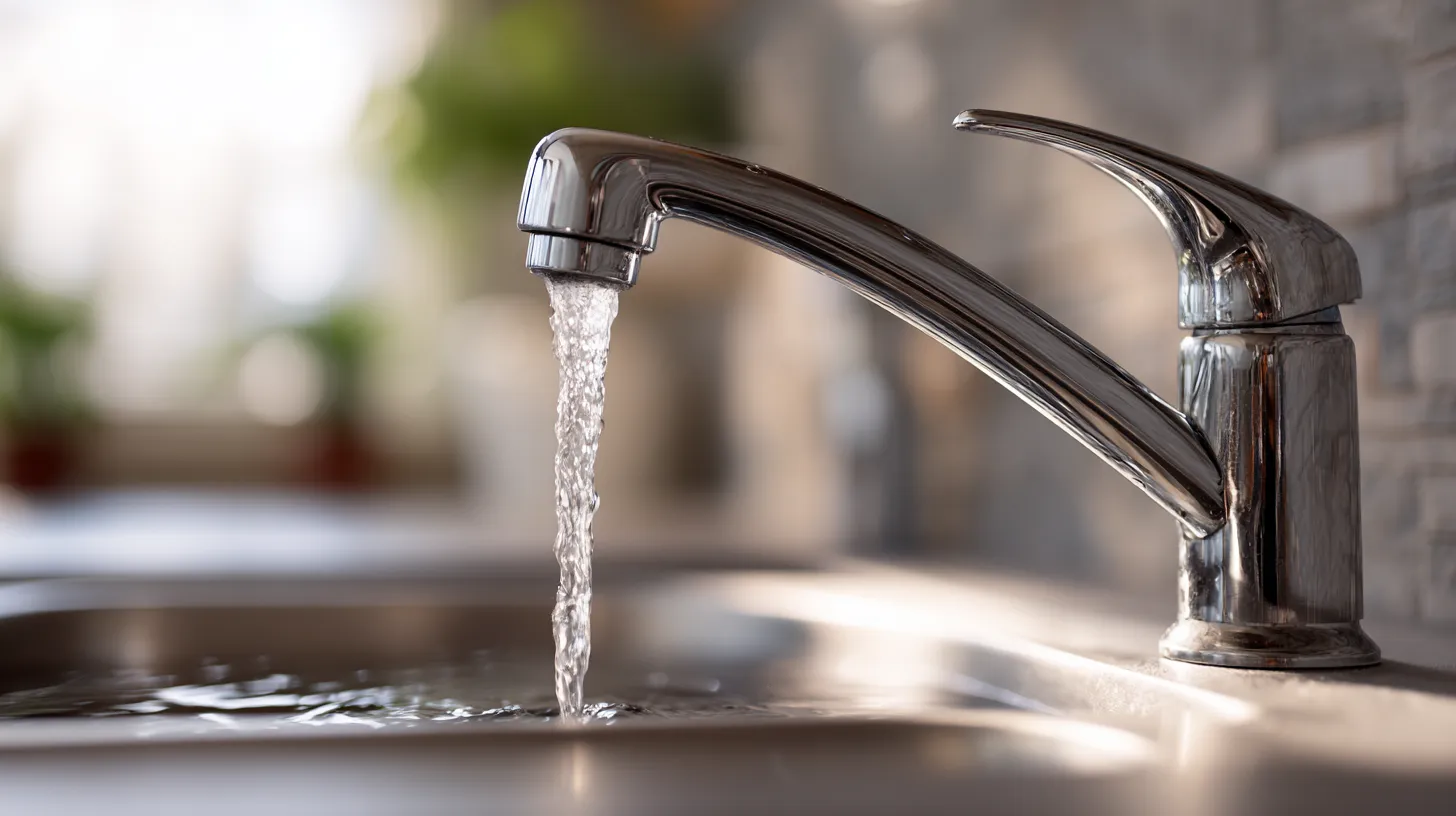
Hard water builds mineral deposits in plumbing and fixtures (USGS). Plainfield Township notes calcium collects on aerators as white buildup and dissolves after about an hour soaking in vinegar.

Scale in the Tank
Heated hard water drops calcium carbonate that shortens equipment life, raises heating costs and lowers electric heater efficiency (USGS). Bradford White’s manual drains a gallon monthly to clear sediment.

Spots and Film
Spots and film on dishes and cloudy glassware are hard-water residue: not dangerous, the USGS says, but unsightly. Calcium also reacts with soap, so cleaning takes more soap and detergent.
Setting and Upkeep
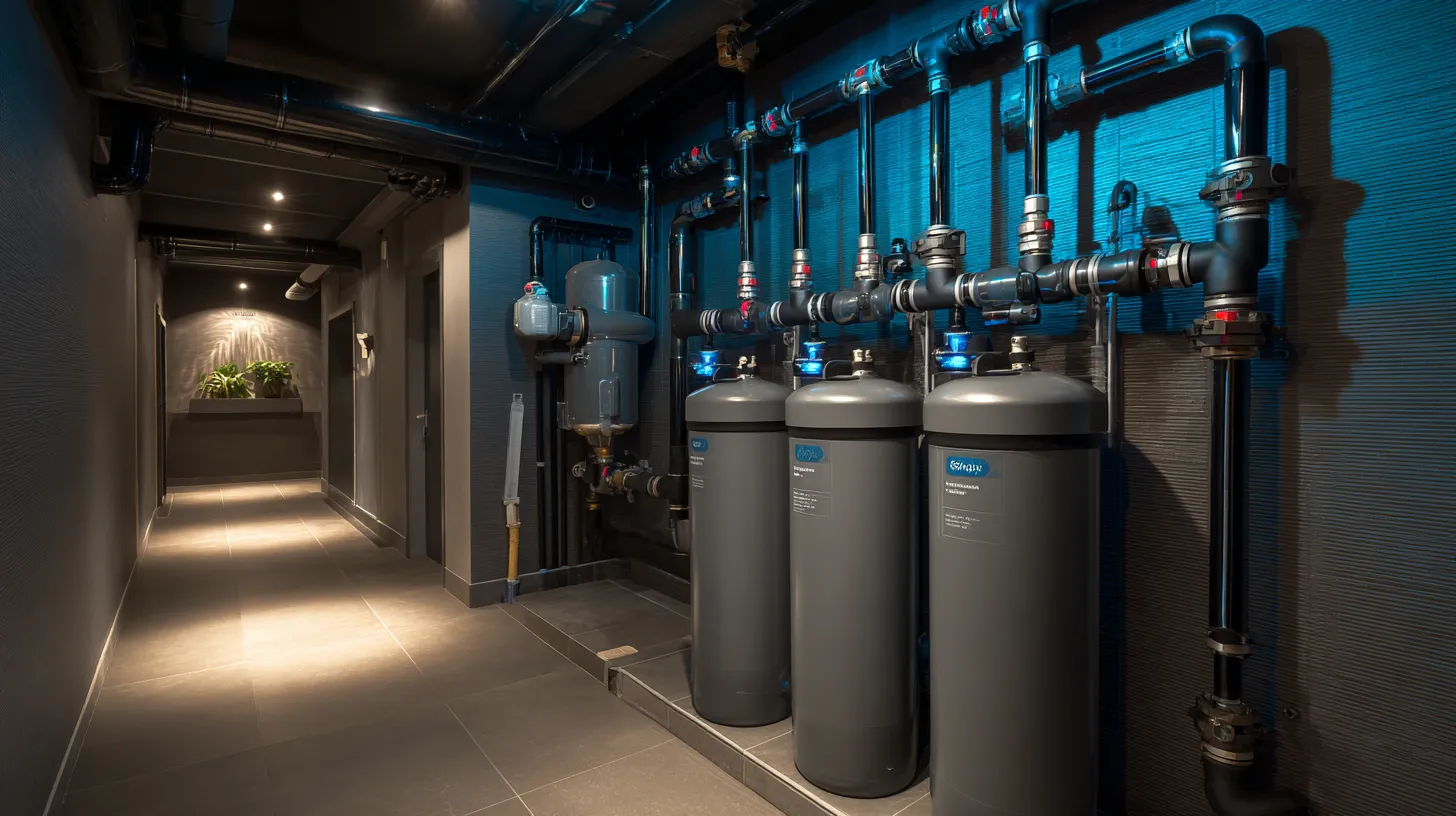
A softener’s hardness setting matches the measured supply plus any iron. Bradford White notes softened water speeds anode rod wear, so a softened home checks the water heater anode more often.
Water heater age matters as much as hardness: the Water Heater Age Lookup reads the build date from the serial number.
Softener Setting Helper
Enter your hardness in grains per gallon, or press “Use” under a town result. Add ferrous iron from a lab report if you have one.
Sodium and drinking water: NDSU Extension and the Vermont Department of Health both describe leaving one kitchen tap unsoftened for drinking and cooking. The Vermont Department of Health advises people on a low-salt diet to ask a health care provider about the sodium level in their water.
Private Wells: Test Your Own Water

A private well has no public water report, so its hardness and iron come only from a test of that well. Rural Algoma, Cascade and Caledonia townships and the Alto area rely on private wells, and Cannon Township publishes no public water system.
Area groundwater runs harder than Lake Michigan water. Plainfield Township says its wells carry more calcium than Lake Michigan water, and Caledonia Township’s wells measure 22–30 grains against 8–10 grains for the Grand Rapids water replacing them.
- Test before setting a softener: A. O. Smith’s softener manual has owners test hardness, iron and pH first.
- Name the iron type: only ferrous (clear-water) iron goes through a softener.
- Use a certified lab: a state-certified drinking water laboratory reports hardness and iron in numbers the helper above accepts.

Town water changes too. Caledonia Township tells customers to adjust softener settings after its switch to Grand Rapids water, and Plainfield Township’s plant softens its well water to roughly Lake Michigan levels before it reaches the tap.
Re-run the lookup when a supplier publishes its next annual report. For softener, filter or iron equipment questions, see water quality services in Grand Rapids.
Common Questions
Is Grand Rapids Water Hard?
Yes. The City of Grand Rapids' 2025 Average Water Analysis lists 142 mg/L of hardness (8.3 grains per gallon) at the plant tap, inside the USGS 121–180 mg/L “hard” band. The raw Lake Michigan water measured 143 mg/L before treatment.
How Do mg/L, ppm And Grains Per Gallon Compare?
Water reports treat ppm and mg/L as the same unit for hardness. NDSU Extension puts one grain per gallon at 17 ppm or 17 mg/L, so 142 mg/L works out to about 8.4 grains; the Grand Rapids report itself lists 8.3.
What Hardness Setting Does A Softener Need On Grand Rapids Water?
Start from the measured figure: 8.3 grains per gallon in the city's 2025 analysis. Iron raises the setting; A. O. Smith's softener manual adds 5 grains for every 1 ppm of ferrous iron. The softener's own manual sets the final rule for that unit.
Does A Water Softener Add Sodium?
Yes. NDSU Extension says about 8 mg/L of sodium goes into the water for every grain of hardness removed, so fully softened Grand Rapids water gains about 66 mg/L. NDSU and the Vermont Department of Health both describe leaving one kitchen tap unsoftened for drinking and cooking. Anyone on a low-sodium diet takes the question to a health care provider.
Why Does My Town Show No Number?
Some suppliers publish no hardness figure: Rockford, Cedar Springs, Sparta and Plainfield Township among them, and Wyoming publishes none for its own city. Private wells have no public report at all. A test at your own tap fills the gap.
Sources and How This Tool Works
Each town's figure comes from its water supplier's own report or web page, named with its year under the result. Where a town buys water from Grand Rapids or Wyoming, the supplier's figure applies; Wyoming publishes no hardness total, so its water uses the number Grandville's 2025 report lists for the same supply. Hardness classes follow the U.S. Geological Survey. Grains per gallon convert at 17 mg/L per grain (NDSU Extension) where a source gives only mg/L. The softener helper adds 5 grains per ppm of ferrous iron (A. O. Smith softener manual) and estimates sodium at about 8 mg/L per grain removed (NDSU Extension).
- City of Grand Rapids — 2025 Average Water Analysis, Lake Michigan Filtration Plant (printed 5/8/2026)
- City of Grandville — 2025 Water Quality Report (City of Wyoming water)
- Georgetown Township — 2025 Water Quality Report
- City of Hudsonville — 2025 Water Quality Report
- City of Lowell — Water Treatment & Distribution
- Caledonia Township — Water Changeover Q&A (October 2025)
- Plainfield Township — Water FAQ
- Village of Sparta — 2025 Water Quality Report
- City of Cedar Springs — 2025 Water Quality Report
- Allendale Charter Township — 2025 Water Quality Report
- Ada Township — Grand Valley Estates 2025 Water Quality Report
- City of Kentwood — Water and Sewers (supplier split at Breton Avenue)
- U.S. Geological Survey — Hardness of Water
- NDSU Extension — Water Softening (Ion Exchange), WQ1031 (revised 5/2022)
- A. O. Smith — Whole House Softeners AOW-S400/S500 Owner's Manual (ferrous iron and compensated hardness)
- Vermont Department of Health — Hardness in Drinking Water (sodium from softening)
- Bradford White — Gas-Fired Water Heater Installation and Operation Manual 238-51007-00R (draining, anode and softened water)
General information for Grand Rapids-area properties, reviewed October 24, 2026. Rules, rates and programs change; the linked source's current version controls. Hardness changes through the year and across a distribution system; the ranges shown come from the suppliers' reports. Sodium and health questions belong with a health care provider.
Water, sewage or gas where it doesn't belong? Grand Rapids Michigan Plumber answers 24/7.
Request Service Call (616) 345-5690