Water Quality Services in Grand Rapids: The Complete Guide

Water quality services are the plumbing work that measures what a building's water contains and installs, repairs and maintains the equipment that treats it: water softeners, whole-house filters, reverse osmosis systems and iron filters. In Grand Rapids, Michigan, the work starts with five entities: the water softener, water hardness, the whole-house water filter, the reverse osmosis system and the water test that decides between them. The Grand Rapids Water System draws on Lake Michigan, yet its 2025 Average Water Analysis measured the tap water as hard. Water quality services in the Grand Rapids area follow the supply: city water, Wyoming-supplied suburbs, softened township wells and private wells each call for different treatment.
Water Treatment Equipment for Grand Rapids Homes and Businesses
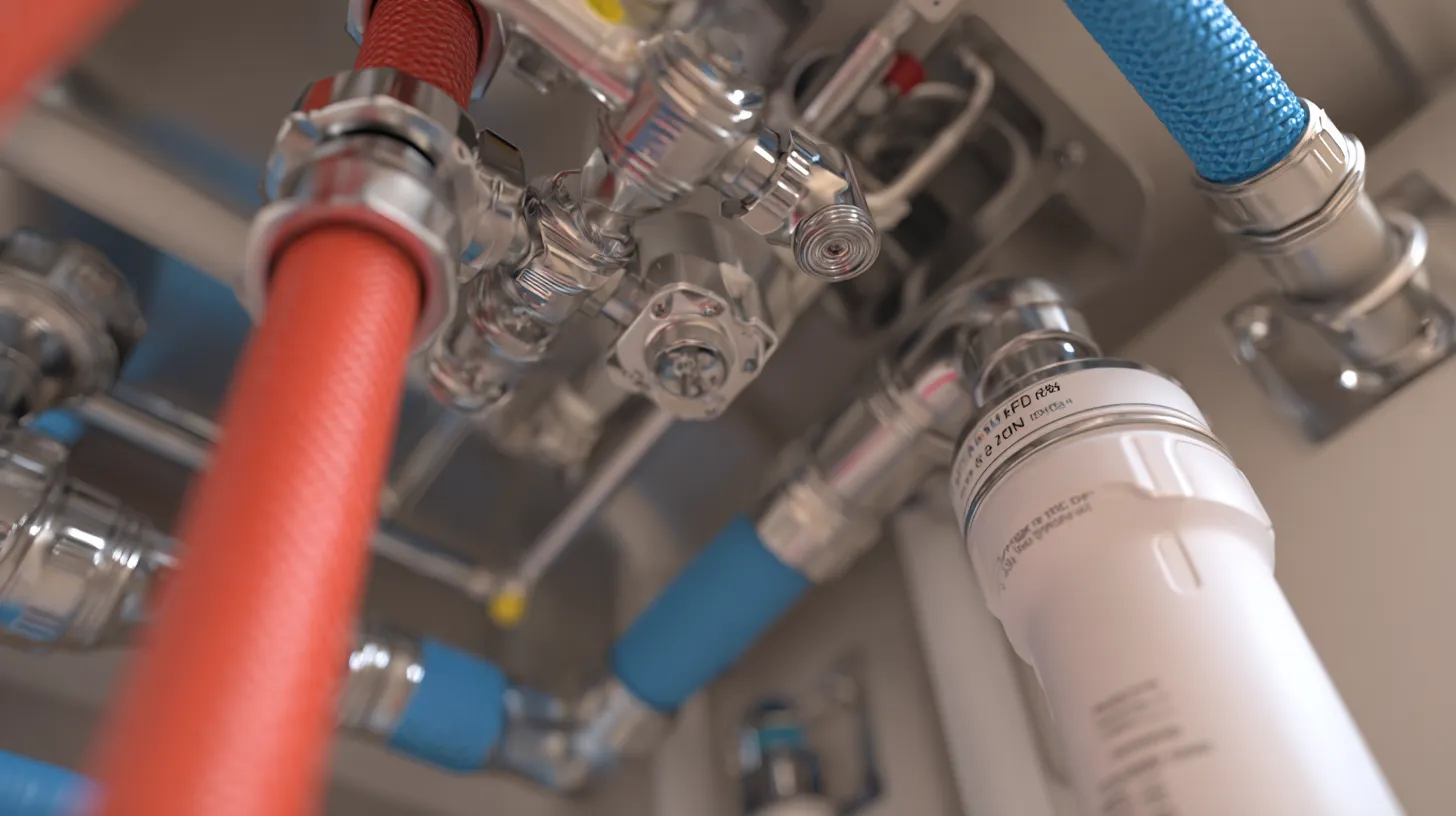
Water treatment equipment matches one method to one measured problem, and no single unit treats every constituent. Five equipment types cover nearly every residential water treatment services call in the Grand Rapids area:
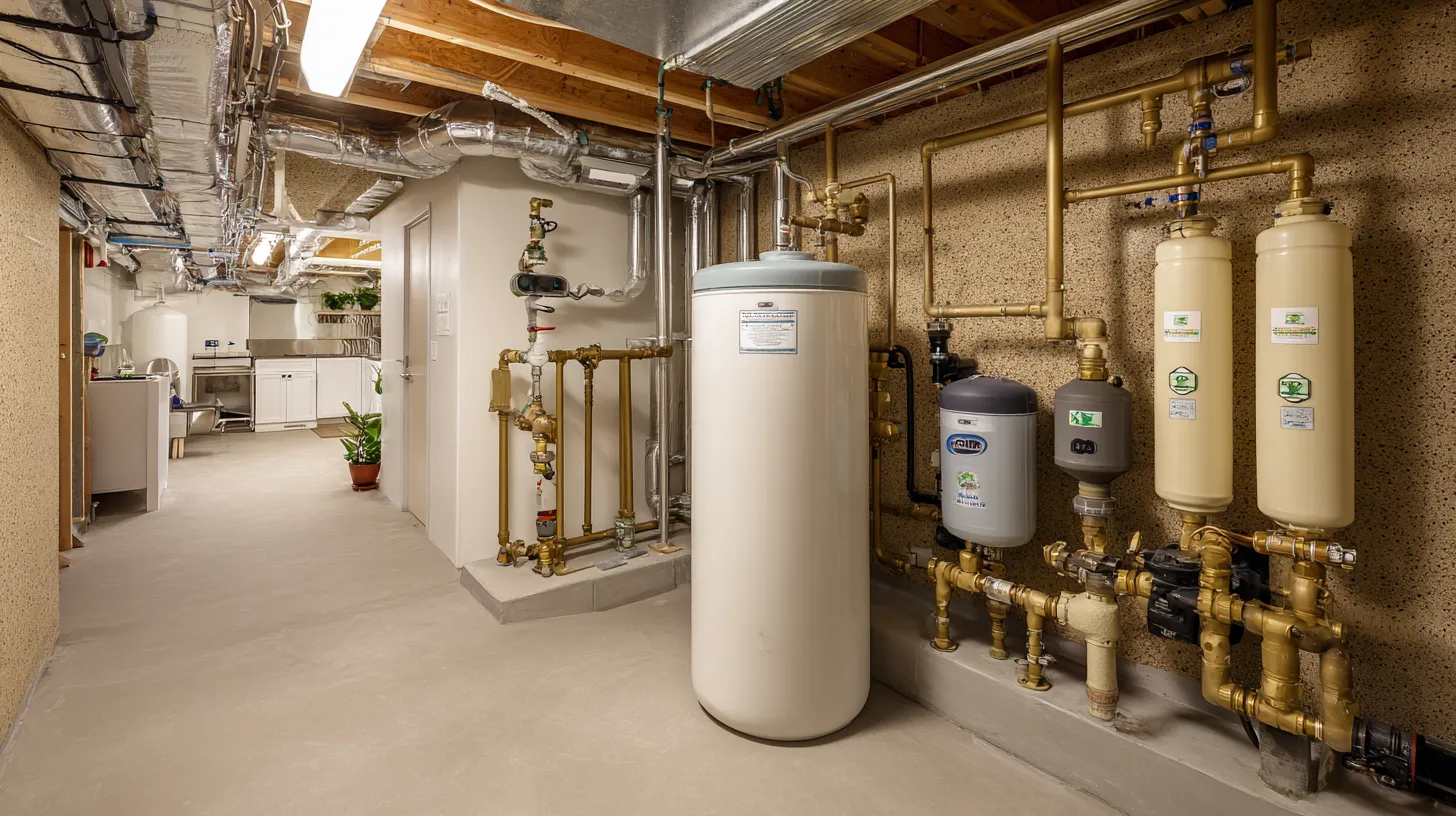
- Ion-exchange water softeners pass water through a resin tank that trades calcium and magnesium for sodium, then regenerate the resin with brine from a brine tank. Dual-tank and demand-initiated regeneration models suit high-use homes.
- Whole-house activated carbon filters sit at the point of entry after the water meter. EPA describes carbon as trapping chemicals as water passes through it, and local installers market carbon for chlorine taste.
- Point-of-use reverse osmosis systems force water through a semipermeable membrane under the kitchen sink and store treated water in a small tank for drinking and cooking.
- Iron filters oxidize and trap dissolved iron that stains sinks, toilets and laundry orange or brown, mostly on well water.
- Sediment filters strain sand and particles ahead of other equipment, protecting resin beds, carbon and membranes.
Hard-water signs drive most softener calls: white scale on faucets and showerheads, spotty dishes, poor soap lather and water heaters that lose efficiency. Filtration calls follow taste, odor, staining or a test result.
Installed costs differ by system. A 2026 Michigan plumbing cost guide (askdoss.com) lists these market ranges:
| System | Typical installed cost |
|---|---|
| Water softener | $1,000–$3,000 |
| Iron filter (or softener for iron) | $800–$2,500 |
| Reverse osmosis or specialized filter (arsenic) | $500–$2,000 |
| Activated carbon or reverse osmosis (PFAS) | $500–$3,000 |
| Oxidizing filter or aeration (sulfur) | $1,000–$3,000 |
| Lab panel: bacteria, nitrate, lead, arsenic, hardness | $150–$300 |
| Extended lab panel with PFAS | $300–$500 |
EPA puts home PFAS filters between $20 and more than $1,000 before maintenance costs.
Grand Rapids-Area Water Supplies and Hardness
Water supply sets the starting point for every softener and filter in the Grand Rapids area, because suburbs draw on different sources and plants. The City of Grand Rapids' 2025 Average Water Analysis from its Lake Michigan Filtration Plant measured total hardness at 142 mg/L (8.3 grains per gallon) at the plant tap, against 143 mg/L (8.4 grains per gallon) in raw Lake Michigan water, with calcium at about 38 mg/L and magnesium at about 12 mg/L. The USGS classes 121–180 mg/L as hard.
| Area | Water supply | Hardness | USGS class |
|---|---|---|---|
| Grand Rapids | Grand Rapids Water System, Lake Michigan | 142 mg/L (8.3 gpg) | Hard |
| Grandville | City of Wyoming, Lake Michigan | 97 ppm | Moderately hard |
| Jenison (Georgetown Township) | City of Wyoming, Lake Michigan | 89–108 ppm, average ~99 | Moderately hard |
| Hudsonville | City of Wyoming, Lake Michigan | 91.1–118.8 ppm, average 98.78 | Moderately hard |
| Lowell | City wells (4) | 130–150 ppm (7.5–8.7 gpg) | Hard |
| Caledonia Township (south well district) | Township wells; the north district switched to Grand Rapids water March 10, 2026 | 22–30 grains per gallon | Very hard |
| Plainfield Township, Comstock Park | Plainfield wells, lime-softened | About half the raw well hardness, near Lake Michigan levels | — |
| Sparta | Village wells with iron removal and softening | No published figure | — |
Sources: City of Grand Rapids 2025 Average Water Analysis; City of Grandville, Georgetown Township and City of Hudsonville 2025 water reports; City of Lowell; Caledonia Township Water Changeover Q&A (October 2025); Plainfield Township; Village of Sparta; USGS hardness classes.
Two systems already treat at the plant. Plainfield Township's 16-million-gallon-per-day lime-softening plant removes about half the hardness from its well water, bringing it to roughly Lake Michigan levels, and serves Plainfield and Alpine townships plus parts of Grand Rapids Township, Algoma Township and Walker. Sparta's village plant became the first municipal system in Michigan to combine iron removal with softening. Private wells outside these systems, common in Algoma Township, Cascade Township and rural Caledonia, carry whatever the aquifer delivers until a test shows otherwise.
Measured Water Constituents in Grand Rapids Tap Water
Measured constituents decide whether a Grand Rapids home needs filtration at all, and the city's 2025 Water Quality Report lists them by name. The City of Grand Rapids states that its water meets or exceeds all requirements of the Safe Drinking Water Act, and every regulated result in the 2025 report shows no violation. Lake Michigan serves as the sole source.
| Constituent (2025) | Grand Rapids result | Limit |
|---|---|---|
| PFOS | 1.7 ppt average (not detected to 2.4) | 16 ppt |
| PFOA | Not detected | 8 ppt |
| Nitrate (as nitrogen) | 0.7 ppm | 10 ppm |
| Chlorine (disinfectant) | 1.04 ppm average (0.05–1.51) | 4 ppm |
| Total trihalomethanes | 59 ppb | 80 ppb |
| Haloacetic acids (HAA5) | 31 ppb | 60 ppb |
| Lead, 90th percentile at the tap | 7 ppb (not detected to 13) | 12 ppb action level |
| Copper, 90th percentile at the tap | 0.0 ppm | 1.3 ppm action level |
| Sodium | 14 ppm | None set |
| Fluoride | 0.65 ppm | 4 ppm |
Source: City of Grand Rapids 2025 Water Quality Report. Lead and copper samples came from 50 homes selected as high risk; one exceeded the lead action level.
The same report lists five more PFAS compounds, arsenic, hexavalent chromium and mercury as not detected, and states that 82 additional contaminants tested below detectable levels. City water reaches the property with these values; lead and copper enter mainly from service lines and home plumbing, which the city states it cannot control.
Water Testing and Certification
Water testing and certification turn a water concern into a measured number and a matched, verified product. Five bodies shape that process for Grand Rapids-area owners: the Michigan Department of Environment, Great Lakes, and Energy (EGLE), the U.S. Environmental Protection Agency (EPA), the Kent County Health Department, the ANSI-accredited certification bodies and certified drinking water laboratories.
City water customers start with the utility's annual Consumer Confidence Report and its lead service line records. The City of Grand Rapids arranges lead testing through Customer Service at 311 or 616.456.3000. Private well owners start with a lab test; EGLE points owners to its Drinking Water Laboratory or local health department labs, and suspended its free test kits after heavy demand.
Certification separates a tested product from a marketing claim. EPA's April 2024 home filter fact sheet identifies five ANSI-accredited third-party certifiers that evaluate drinking water filters for PFAS, and it directs buyers to look for NSF/ANSI 53 or NSF/ANSI 58 certification for PFAS reduction on the packaging, then confirm it in the certifier's product directory. EPA adds that those certifications, as of April 2024, focus on PFOA and PFOS and do not yet show reduction to EPA's new drinking water standard. Maintenance completes the process: EPA states that a filter works only when maintained on the manufacturer's schedule.
Local Water Programs and Reports
Local water programs and reports give Grand Rapids-area owners free, address-level data before any equipment purchase. Five sources matter most:
- The Grand Rapids Water Quality Report publishes each year's regulated and unregulated results for the Lake Michigan supply.
- The 2025 Average Water Analysis lists hardness, calcium, magnesium, pH, chloride, sulfate and iron at the raw lake, plant tap and distribution system.
- The lead service line map at grandrapidsmi.gov/LSLmap shows the city's service line records by address.
- The Lead Line Replacement Program replaces lead service lines, free when a leak appears on the lead line or a city construction project reaches the address; the city budgeted $11.4 million for private-side work in fiscal year 2027.
- The Caledonia Township Water Changeover Q&A (October 2025) explains the township's move from 22–30-grain wells to Grand Rapids water, north first and south after the Kraft trunkline, and tells customers to adjust softener settings after the switch.
Suburban inventories fill in the rest of the metro. Lowell's 2024 inventory of 1,362 service lines found 9 lead lines, 69 galvanized lines previously connected to lead and 466 of unknown material, with lead and qualifying galvanized lines replaced at no cost to the homeowner. Georgetown Township reports 15,733 service lines in Jenison with no known lead lines, Allendale reports 3,979 with none known or presumed, and Wyoming reports no known lead service lines. Sparta lists 1,591 service lines, 22 of them galvanized on the customer side, and replaces lead lines under Michigan's Lead and Copper Rule.
The Grand Rapids Water System Counted 17,165 Known or Presumed Lead Service Lines in 2025
Lead service lines remain the main lead source for Grand Rapids homes: the 2025 Water Quality Report counts 17,165 known or presumed lead lines among 80,196 service lines. The report states that there is no safe level of lead in drinking water and that lead comes primarily from service lines and home plumbing materials. Its guidance for affected homes runs in order: cold water only for drinking, cooking and baby formula; flushing the pipes before use, for at least 5 minutes on a lead or galvanized-requiring-replacement line; and a filter certified by an ANSI-accredited certifier to reduce lead. A lead service line found leaking in Grand Rapids qualifies for replacement at no cost to the owner under the city's Lead Line Replacement Program, which ends the source rather than filtering it.
Grand Rapids Measured PFOS at an Average of 1.7 Parts per Trillion in 2025, and PFOA Went Undetected
PFAS in Grand Rapids tap water measured low in 2025: PFOS averaged 1.7 ppt with a high of 2.4 ppt against the 16 ppt limit the report lists, and PFOA, PFHxS, PFNA, PFBS, PFHxA and HFPO-DA went undetected. EPA's home filter fact sheet advises owners to check the water provider's PFAS results first, and states that a filter adds little where PFAS go unmeasured or sit below federal limits. Private wells follow a different path. Cannon Township reported low-level PFAS in shallow groundwater in 2026, and EGLE offered testing to nearby well owners. A well test, not the city report, answers the PFAS question for a private well.
Ion-Exchange Softening Adds About 8 mg/L of Sodium for Every Grain of Hardness Removed
Softened water carries more sodium than the supply it started with, because ion exchange trades each grain of hardness for sodium. North Dakota State University Extension puts the addition at about 8 mg/L of sodium per grain removed. Applied to Grand Rapids water at 8.3 grains per gallon, full softening adds roughly 66 mg/L to the 14 ppm of sodium the city's 2025 report lists, a calculation from those two figures. The same extension source describes leaving one kitchen cold tap unsoftened, which keeps that sodium out of drinking and cooking water while the rest of the house runs softened. Running that tap from a point ahead of the softener gets decided at installation.
EGLE Recommends Testing Private Wells for Coliform Bacteria and Nitrate Every Year
EGLE recommends inspecting a private well and testing it for coliform bacteria and nitrate every year, because groundwater conditions change over time. Michigan requires a private residential well to be tested and inspected only when it is installed, so the yearly test falls to the owner. EGLE's 2026 Private Residential Well Awareness Day release counts 2.6 million Michiganders on private wells. Around Grand Rapids, that includes rural Algoma, Cascade and Caledonia townships and the Alto area, where the Kent County Health Department issues well and septic permits. A hardness and iron reading added to the bacteria and nitrate panel sizes any softener or iron filter on the same test.
EPA Rates Reverse Osmosis and Other High-Pressure Membranes Above 90% Effective Across a Wide Range of PFAS
EPA rates high-pressure membranes, nanofiltration and reverse osmosis, as typically more than 90% effective across a wide range of PFAS, including shorter-chain compounds that carbon holds less well. The trade-off sits in the waste stream: about 80% of feed water leaves as treated water and about 20% leaves as concentrate. EPA describes membranes as a fit for point-of-use treatment in homes, where the treated volume stays small. Granular activated carbon works well on longer-chain PFOA and PFOS for a period set by carbon type, bed depth and flow rate, and anion exchange resins remove essentially all PFAS for a period set by the resin. Reverse osmosis drinking water systems under the kitchen sink apply that membrane technology to the water people drink.
Frequently Asked Questions
Does Grand Rapids Have Hard Water?
Yes. The City of Grand Rapids' 2025 Average Water Analysis measured 142 mg/L (8.3 grains per gallon) at the plant tap, against 143 mg/L (8.4 grains per gallon) in raw Lake Michigan water. The USGS classes 121–180 mg/L as hard. Wyoming-supplied Grandville, Jenison and Hudsonville test moderately hard, near 97–99 ppm.
Is Grand Rapids Tap Water Safe To Drink?
The City of Grand Rapids states that its water meets or exceeds all Safe Drinking Water Act requirements, and its 2025 report lists no violations. PFOA went undetected, PFOS averaged 1.7 ppt against a 16 ppt limit and nitrate measured 0.7 ppm against 10 ppm. Lead depends on each home's service line and plumbing.
Does A Water Filter Remove Lead?
A filter certified by an ANSI-accredited certifier to reduce lead reduces lead exposure, according to the City of Grand Rapids' 2025 Water Quality Report, when used by its instructions. A water softener targets hardness, not lead. Grand Rapids replaces a leaking lead service line at no cost to the owner.
What Hardness Setting Does A Softener Use On Grand Rapids Water?
A softener's hardness setting matches the measured supply. Grand Rapids water measures 8.3 grains per gallon in the city's 2025 analysis. Caledonia Township well water measures 22–30 grains, and the township tells customers to adjust softener settings after switching to Grand Rapids water.
How Often Does A Private Well Need Testing In Michigan?
EGLE recommends testing a private well for coliform bacteria and nitrate every year. Michigan requires testing only when the well is installed, so later tests fall to the owner. The EGLE Drinking Water Laboratory and local health department labs run paid tests.
Common Misconceptions About Water Softening and Filtration
Misconception: A Water Softener Purifies Drinking Water
A water softener exchanges calcium and magnesium for sodium inside a resin tank, and softening targets those hardness minerals only. Lead, PFAS and other constituents call for treatment certified for that constituent. EPA points buyers to NSF/ANSI 53 or 58 certification for PFAS reduction, and the City of Grand Rapids points to ANSI-accredited certification for lead. A softened home also keeps its yearly water heater anode rod inspection.
Misconception: Boiling Tap Water Removes Lead
The City of Grand Rapids' 2025 Water Quality Report states that boiling water does not remove lead. The city directs residents to use only cold water for drinking, cooking and baby formula, and to flush pipes before use. Homes on a lead or galvanized-requiring-replacement service line flush for at least 5 minutes.
Misconception: Every Home Water Filter Removes PFAS
EPA states that not all filters address PFAS. Filters certified to NSF/ANSI 53 or NSF/ANSI 58 for PFAS reduction carry independent verification, and as of April 2024 those certifications focus on PFOA and PFOS. EPA lists activated carbon, reverse osmosis and ion exchange resins as the filter types that reduce PFAS.
Misconception: A Reverse Osmosis System Treats Water For The Whole House
EPA describes high-pressure membranes as a fit for point-of-use treatment, because treated volume stays small and the concentrate stays manageable. About 20% of the water fed to a membrane leaves as concentrate. Whole-house treatment relies on point-of-entry equipment such as softeners and carbon filters, with reverse osmosis serving the kitchen tap.
Misconception: Well Water Needs Testing Only When The Well Is Drilled
Michigan requires private residential wells to be tested and inspected at installation only. EGLE recommends a yearly well inspection with coliform bacteria and nitrate tests, because groundwater conditions change. Cedar Springs' new municipal well brought temporary brown water in 2025, a reminder that groundwater shifts even on public systems.
Ongoing Debates in Water Treatment
Ion-exchange softeners and salt-free conditioners divide owners choosing hardness treatment. Ion-exchange softeners remove calcium and magnesium from the water itself, which ends scale at fixtures and in the water heater. Salt-free conditioners add no sodium and send no brine down the drain. Grand Rapids-area installers offer both and describe them as serving different purposes, so the measured hardness and the household's priorities settle the choice.
Whole-house and point-of-use filtration divide owners treating a specific constituent. Point-of-entry filters treat every tap, including showers and laundry. Point-of-use filters, such as under-sink reverse osmosis, concentrate treatment on drinking and cooking water, which EPA describes as a smaller volume with easier waste handling. The constituent, its level and the cost of treating every gallon decide the split.
Filtering city water divides owners on a supply that meets every standard. EPA's fact sheet states that a PFAS filter adds little where PFAS sit below federal limits, and Grand Rapids measured PFOA as not detected. The same city report states that lead exposure stays possible even when tap sampling shows none at one point in time, and recommends a certified lead filter as one protective step. The home's service line material and plumbing age settle the question.
Softening the kitchen tap divides softener owners. A fully softened house delivers the same water everywhere and keeps scale off every fixture. NDSU Extension describes leaving one kitchen cold tap unsoftened, which keeps the roughly 8 mg/L of sodium added per grain out of drinking and cooking water. Diet, fixture layout and plumbing access decide which route an installation takes.
Connecting to public water or keeping a private well divides Caledonia Township owners. Connection ends private well testing and replaces 22–30-grain well water with 8–10-grain Grand Rapids water, per the township. Keeping the well avoids a $4,000 connection fee plus the contractor's service-line cost, and the township does not require well owners to connect.
Components of a Water Treatment System
Every water treatment installation works through the same set of parts. The resin tank is a component of an ion-exchange water softener; its beads hold sodium and capture calcium and magnesium as water passes through. The brine tank is a component of the same softener; it holds the salt solution that regenerates the resin, and its salt level sets the owner's routine check. The bypass valve is a component of a whole-house water treatment installation; it routes water around the equipment during service and repair. The semipermeable membrane is a component of a reverse osmosis system; it separates dissolved constituents from the water and sends about 20% of the feed to the drain as concentrate. The activated carbon cartridge is a component of a carbon water filter; it adsorbs chemicals until its capacity runs out, which is why EPA ties filter performance to replacement on schedule. A drain line, a control valve and the water test that sized the system complete the installation.

Summary
Water quality services in Grand Rapids cover five areas: treatment equipment, local water supplies and hardness, measured constituents, testing and certification, and local programs and reports. Grand Rapids tap water tests hard at 142 mg/L, meets every Safe Drinking Water Act requirement in its 2025 report, and reaches some homes through 17,165 known or presumed lead service lines. Softeners treat hardness, certified filters and reverse osmosis treat specific constituents, and private wells rely on yearly tests. Water quality services in the Grand Rapids area start with the measured water and end with certified, maintained equipment.